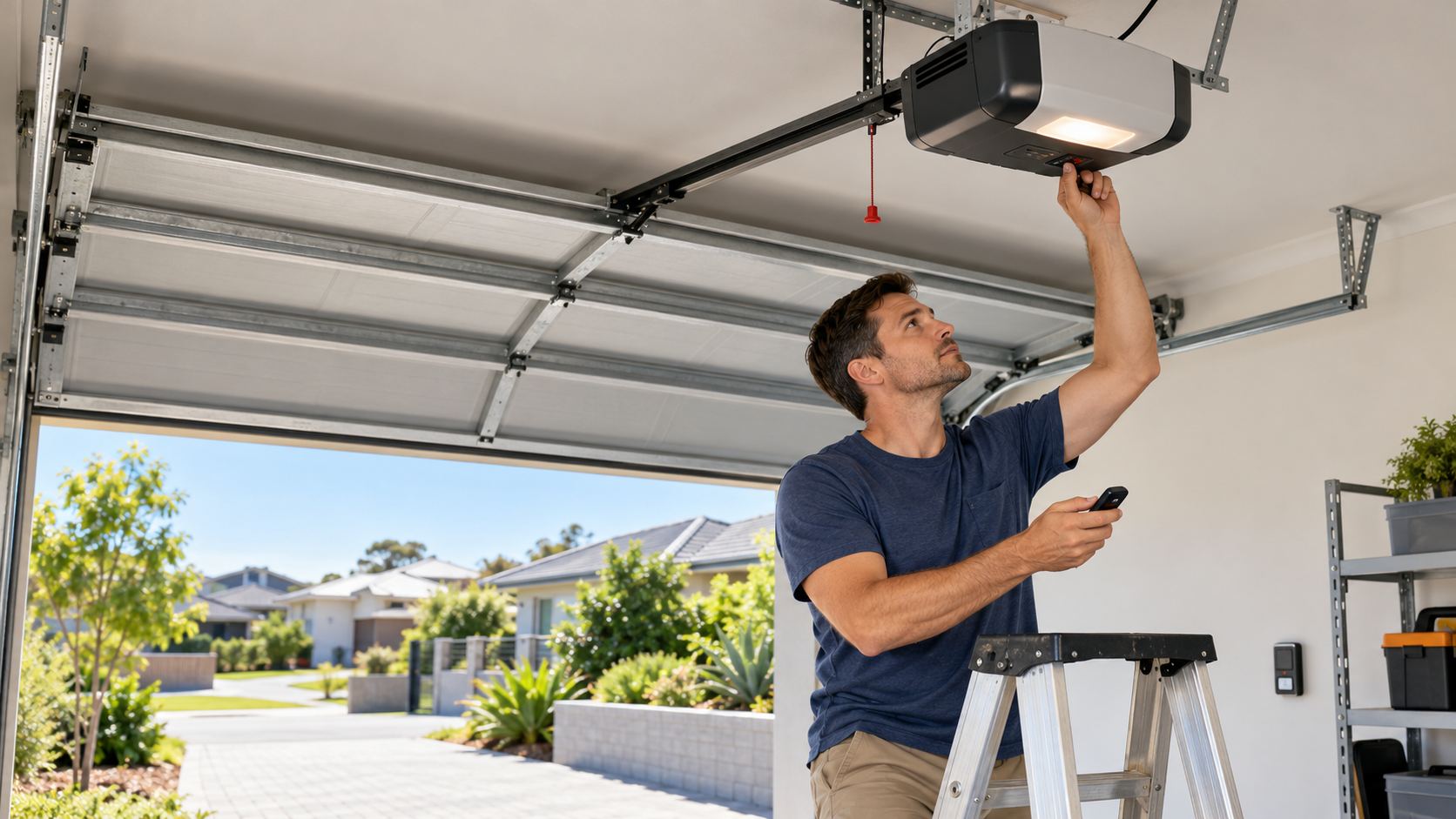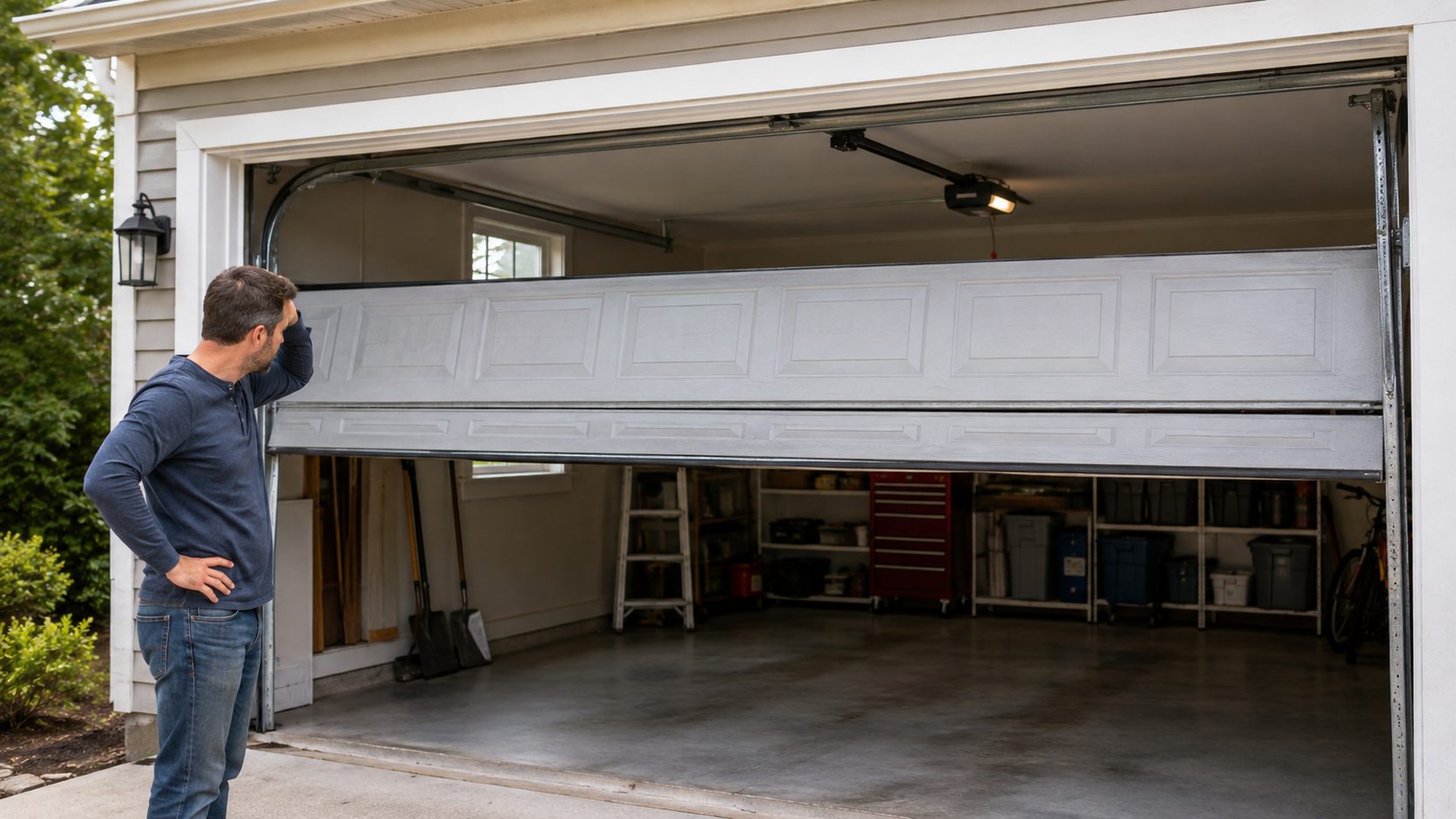

If your garage door is out of alignment (even by a hair), it wears down every time you use it. When there is any misalignment, the motor and springs have to work harder. Over time, this can spiral into more expensive repairs, a shorter lifespan for your garage door, and could even create safety risks.
Look at the big picture, misalignment is responsible for up to 50% of all mechanical equipment failures, and the same principle applies to your garage door’s tracks, rollers, and springs.
It’s a common problem, but most Australians don’t notice anything’s wrong until the door jams halfway or the opener completely stops working. Knowing what throws your garage door out of alignment and spotting the signs early can save you a lot of time and money down the line.
This post explains why garage door alignment is important, how to find early warning signs, and what you can do to keep it working quietly and reliably.
Let’s dive in.
How to Know When Your Garage Door is not Aligned
A misaligned garage typically gives you subtle warnings first; small signs that are easy to miss if you’re not paying attention. Here’s what to look out for:
The Door Looks Uneven
If one side of your garage door is sitting lower than the other, or the bottom seal doesn’t touch the ground evenly, it’s a telltale sign your door may be out of alignment. This uneven setup puts extra strain on the springs, opener, and tracks, which gradually adds up.
A quick visual check from a few steps back can tell you if the door looks level. If some looks off (even slightly), it’s worth calling a professional to check the garage door alignment before it causes bigger issues.
You Hear Grinding or Scraping Noises
This one is relatively easy to identify. Any grinding, scraping, or screeching noise is a clear tell that metal parts are rubbing together due to misalignment. This happens if the tracks aren’t lined up properly or the rollers are worn out.
Using the door like this can bend the tracks or damage the rollers. Sometimes, similar noises can happen if the garage door sensors aren’t working.
Uneven or Wobbly Movement
When your garage door shakes, stops halfway, or moves in sudden bursts, that’s a sign of uneven tracks or spring tension. Wobbly movement can be dangerous because it can throw the door off balance and cause a spring or cable to snap.
If the movement feels rough or unpredictable, stop using the door immediately and contact a professional for garage door alignment services before someone gets hurt.
Sudden Reversals While Closing
You go to close the garage door, but it suddenly opens again. That might be a sensor issue, but it can also happen when the door’s out of alignment. When the tracks aren’t straight, the opener senses extra resistance and automatically reverses to stop any damage.
Once you’ve confirmed the sensors are clean and correctly aligned, and the problem is still bothering you, chances are the garage door alignment needs professional adjustment.
What Causes Garage Door Misalignment?
Regular use, changing weather, and busy households can all cause your garage door to go out of alignment, particularly in Australia. Here are some common reasons:
Normal Wear and Tear
With everyday use, constant movement and vibration can loosen the bolts, brackets, and tracks. Even with normal use, all those shifts can put your door out of alignment.
Scheduling regular garage door alignment services can help you find out any trouble before it becomes a bigger problem.
Accidental Bumps
It doesn’t take a big hit to cause problems; even a light bump from a car, bike, or bin can potentially shift the tracks out of place. A small dent or bend can make the door move less easily and throw it out of alignment.
If your door starts moving unevenly, sometimes adjusting the garage door sensors can help get things working in sync again.
Temperature Changes
Australia’s temperature swings can put stress on the metal parts of your garage door. The tracks expand when it’s hot and contract in the cold, which can make the door go out of balance or alignment.
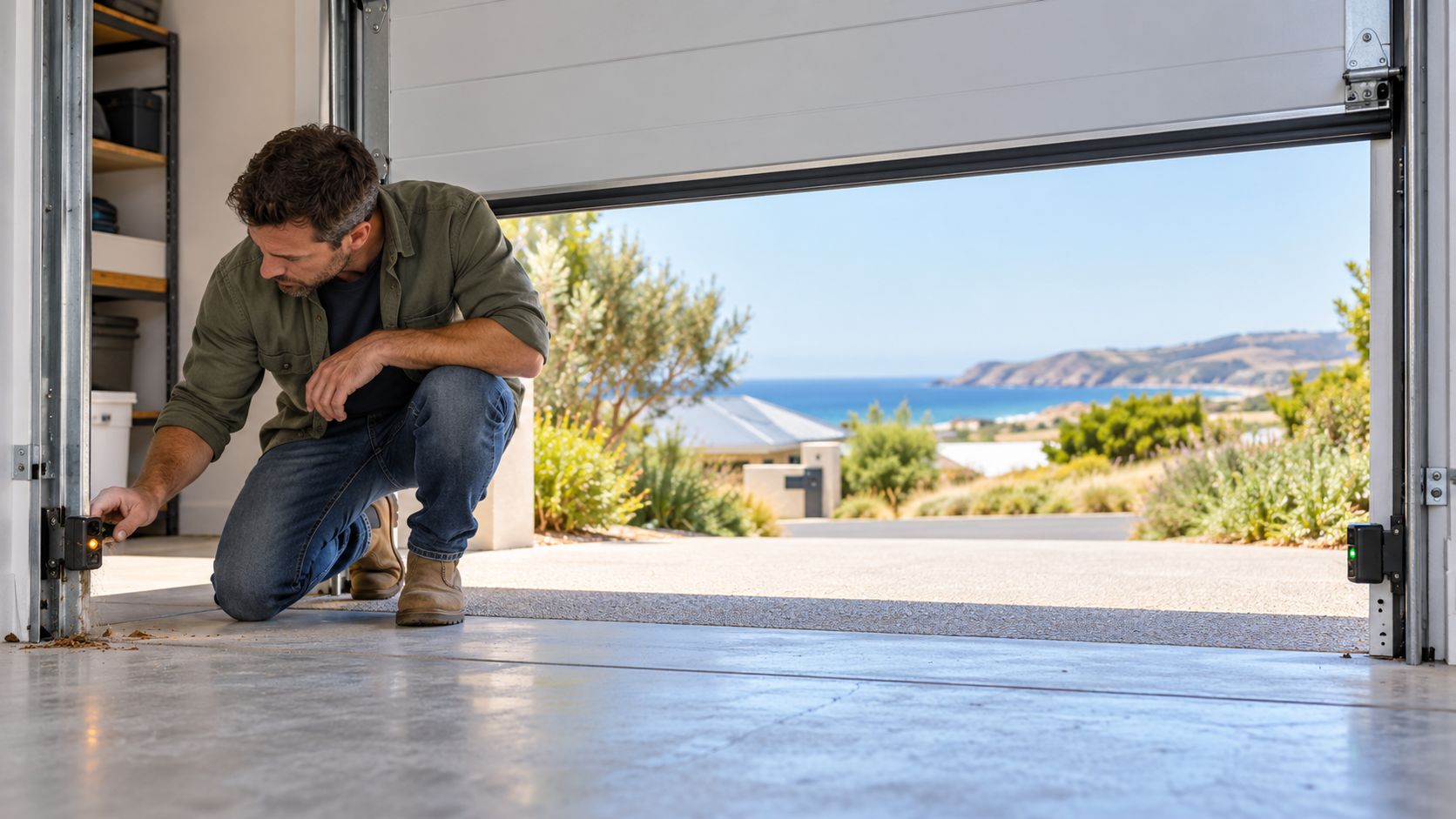
Checking your door’s alignment as the seasons change, and knowing how to align your garage door sensors, can help make sure your setup keeps working efficiently all year:
- Locate sensors – Find the sensors on each side of the door near the bottom.
- Check lights – A green light on one and blinking or off on the other usually indicates misalignment.
- Clear obstructions – Make sure nothing is blocking the sensors.
- Loosen screws – Slightly loosen the screws holding the sensor in place.
- Align sensors – Move sensors left, right, or up/down until both sensors face each other and lights turn solid green.
- Tighten screws – Once aligned, tighten the screws to secure sensors.
- Test door – Interrupt sensor beam and check if door reverses.
- Final check – Test multiple times for proper operation.
DIY Adjustments
DIY fixes with the wrong tools can make things worse. Adjusting the springs, tracks, or opener without any prior knowledge or experience can potentially throw everything out of whack or even make things unsafe.
If you’re not sure what the problem is, it’s best to get professional garage door alignment services, rather than risk making things worse.
How Professionals Fix Alignment Issues
Professional garage door alignment technicians go through every part to make sure your door works properly and is safe. Here’s what you can expect during a professional service:
Inspection
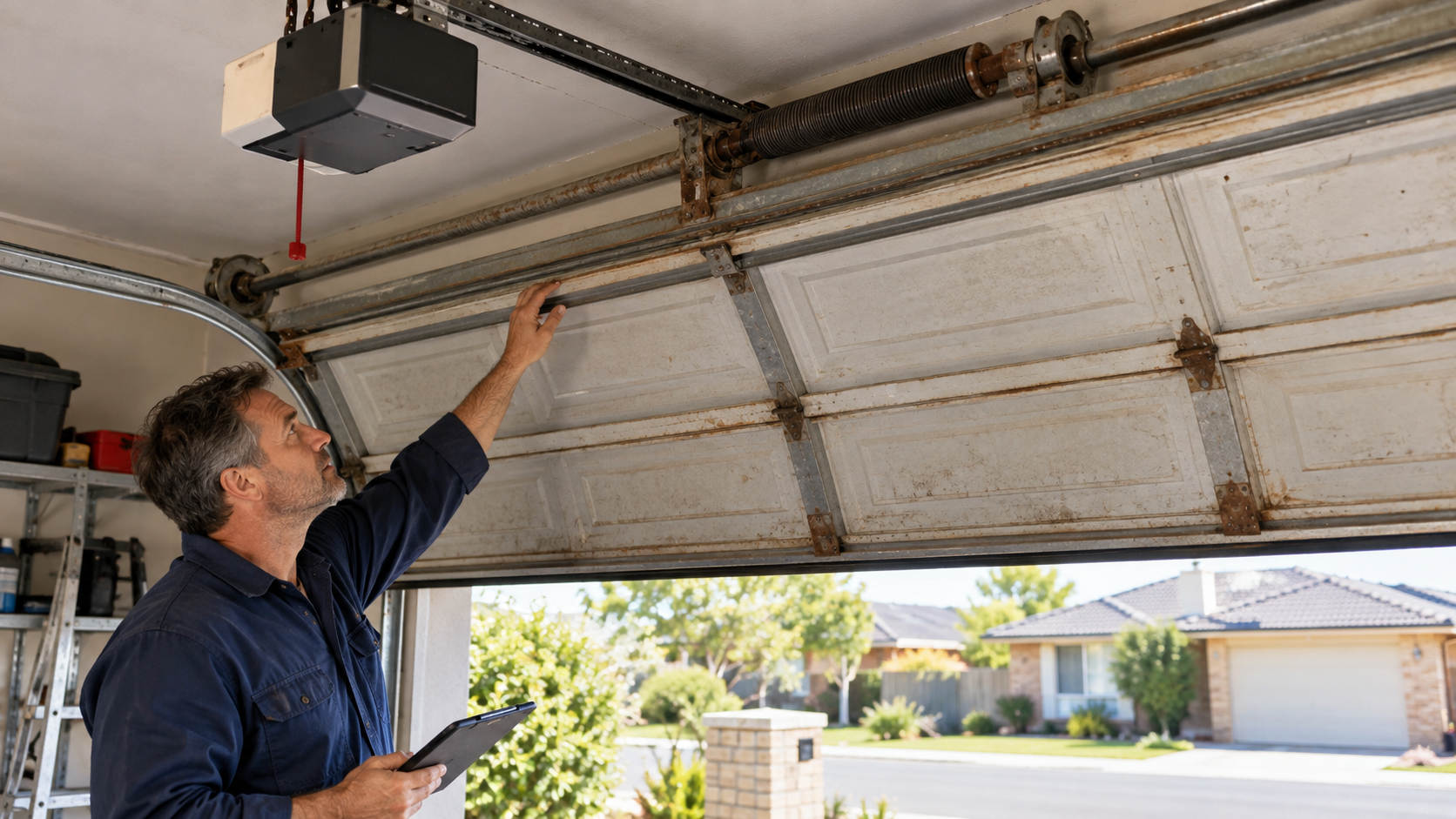
The technician begins by inspecting the tracks, rollers, cables, springs, and garage door sensors for signs of wear, rust, or damage. This step helps identify the cause of the misalignment before making any adjustments.
Track Realignment
The technician adjusts the tracks and rollers so everything moves freely, and the door is level when shut. This lets the door move flawlessly and stops it from scraping or running unevenly.
Spring Balancing
A technician will check and adjust spring tension, so the door goes up and down evenly. Getting the spring balance right takes pressure off the motor and stops the door from wobbling or slamming shut.
Hardware Tightening
Loose brackets, hinges and bolts are tightened so there’s no unwanted movement. This keeps the door stable, minimises vibration and helps your door last longer.
Sensor Calibration
If needed, the technician will get the garage door sensors aligned properly. When the sensors are set up right, the door will reverse if something’s in the way.
Lubrication and Safety Check
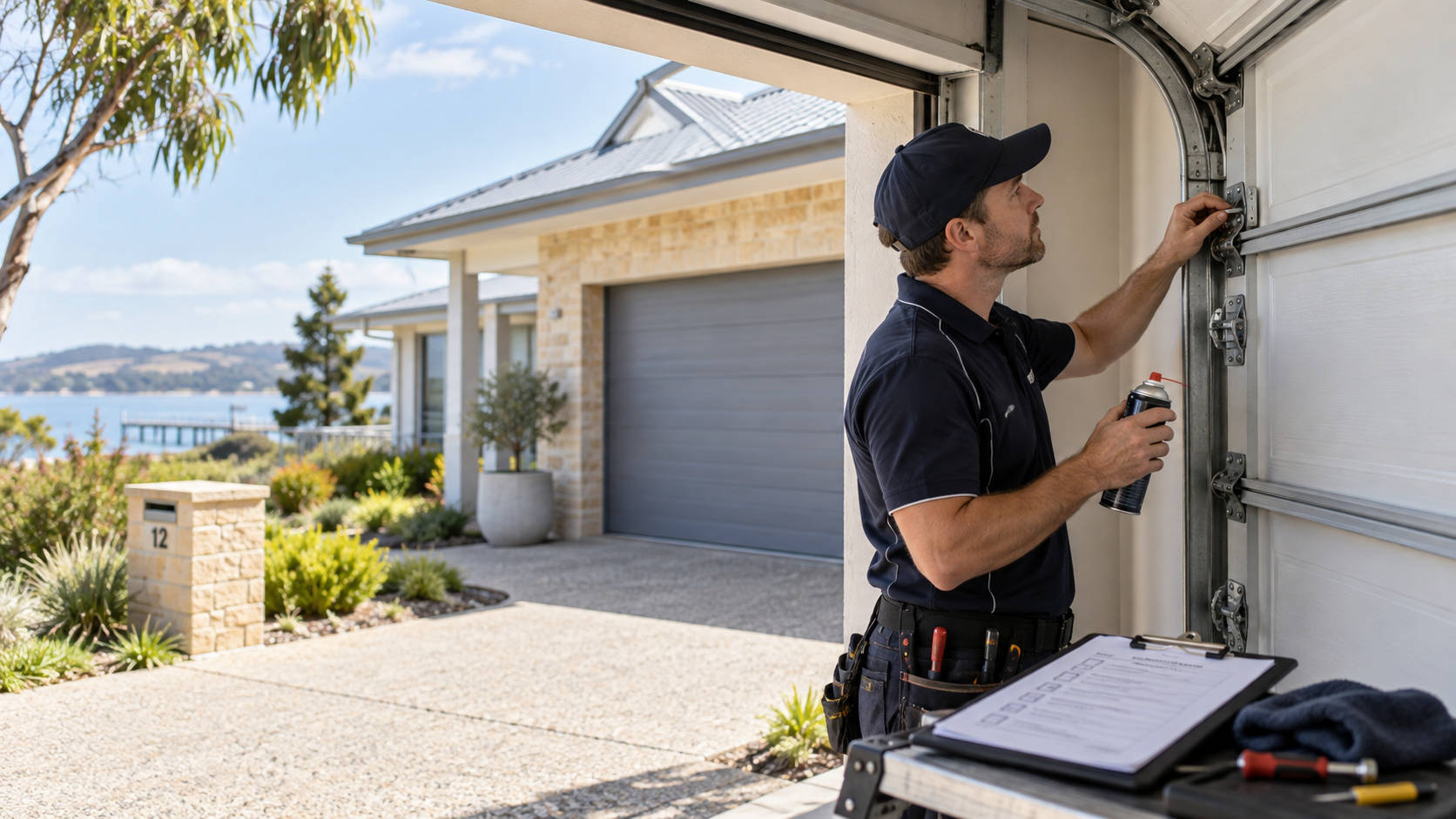
Lastly, all the moving parts, like rollers, hinges, and springs, are lubricated with a good lubricant. The technician also checks the safety systems so your door works without any problems.
Conclusion: The Importante of Proper Garage Door Alignment
If your garage door’s been sticking, tilting, or making strange noises, don’t wait for it to get worse. Booking garage door alignment services early can prevent costly repairs, extend your door’s lifespan, and keep everything working safely for years to come.
Before calling, you can check that your sensors are clean and level, but if the problem keeps coming back, it’s time to call a professional. Schedule your alignment with Filip Garage Door. Our technicians will inspect, realign, and fine-tune every part of your system, giving you complete peace of mind every time you press that button.