How long do garage doors and openers last? It’s a common question when you’re deciding between repair and replacement.
Wear doesn’t always happen suddenly. Springs weaken, rollers wear down, and openers can struggle over time. Knowing the typical lifespan of each component can help you spot problems early and know when door opener repairs may be needed.
A garage door that fails at the wrong time can leave your property unsecured or disrupt your business. This guide will help you understand:
- How long garage doors and openers typically last
- How long key components like springs and rollers last
- Signs your garage door needs repair or replacement
- When repair makes more sense than replacement
- How maintenance can extend its lifespan
The goal is to help you make a clear, informed decision.
Understanding Garage Door Lifespan and Durability
A garage door system is a group of parts, each with its own working life. Looking at them separately gives you a far more accurate picture than treating the door as a single unit.
Garage Door Opener Lifespan Explained
A standard garage door opener usually lasts between 10 and 15 years. Some heavy-duty units run for 20 years or more, though older models sometimes lack the safety features required today under Australian standards.
The garage door opener lifespan depends on three things.
- Frequency of use: A quiet household using the door twice a day wears the motor far more slowly than a busy family opening it 15 times a day.
- Quality of the unit: Builder-grade openers wear out sooner than professional-grade motors.
- Maintenance: Regular lubrication and inspections stretch the working life of the system.
Springs And Rollers Wear Cycles
Springs are the hardest-working part of the whole system. They carry the weight of the door and are rated in cycles, with one cycle being a single open and close. Torsion springs are usually rated for a set number of cycles, which for an average home works out to roughly seven to 12 years of service.
Rollers, tracks, and hinges wear on a similar timeline. Nylon rollers tend to run quieter and last longer than steel ones. Since spring failure is both common and dangerous, it is the part most worth watching.
Door Panel Longevity Factors
The garage door panel itself is the longest-lasting component. A quality steel or aluminium door can last 20 to 30 years with basic care. In coastal areas, like much of South Australia’s coastline, salt air speeds up corrosion, so finish quality and washing down the panels matter more than they would inland.
Timber doors look great but need refinishing to hold up against long, hot summers. Sun exposure, moisture, and impact damage are the main factors that cut a panel’s life short.
Signs Your Garage Door Needs Repair or Replacement
Under the National Construction Code (NCC) – ABCB, compliant automatic garage door systems must meet relevant safety requirements, including protection against entrapment. If your door or opener no longer responds reliably, it’s worth having the system checked rather than waiting for a complete failure.
Most garage door problems also give you warning signs first. Here are some of the common ones to watch for.
Noisy or Jerky Movement
Grinding, squealing, or jerky movement can point to worn rollers, dry tracks, loose hardware, or a strained motor. A little operating noise is normal, but a sudden change deserves attention.
If the door starts catching or shaking as it moves, continuing to use it can put extra strain on other components. A professional inspection can identify the cause before the problem gets worse.
Sagging Sections or Gaps
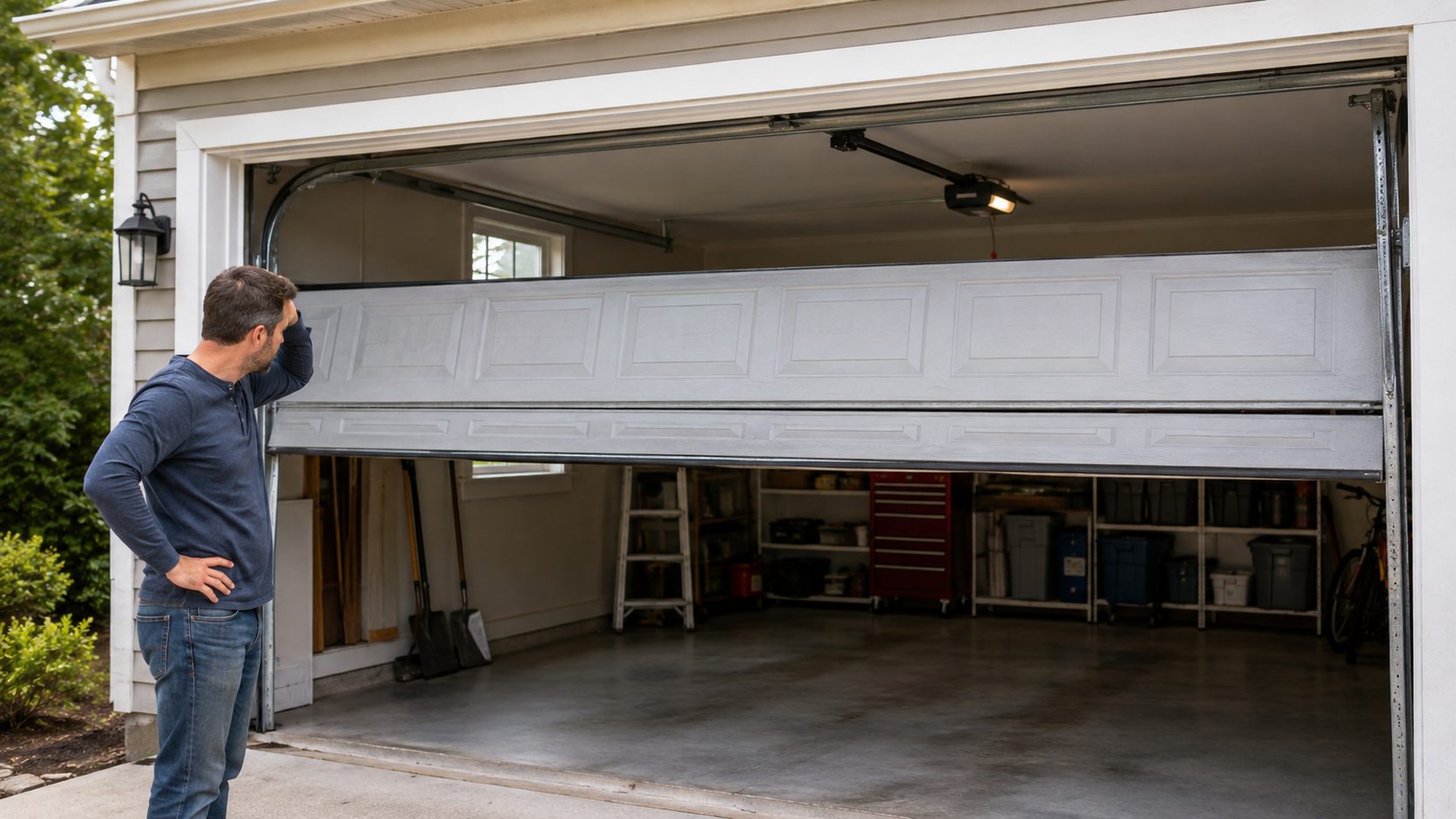
A door that sits unevenly, sags on one side, or leaves gaps at the base may have a problem with its springs, tracks, or alignment. These issues can affect how smoothly the door opens and closes.
Uneven movement also puts additional load on the opener. Addressing the problem early can help prevent damage to other parts of the system.
Slow or Unresponsive Opener
An opener that hesitates, reverses unexpectedly, or responds slowly to the remote may be nearing the end of its service life. Flickering lights, buzzing sounds, or inconsistent sensor behaviour can also indicate a developing problem.
If the opener fails to reverse properly or the safety sensors aren’t working consistently, don’t ignore it. These are safety issues as well as signs of wear.
The Door Won’t Stay Open
If your garage door starts dropping or won’t remain fully open, the springs or counterbalance system may need attention. This can make the door much heavier for the opener to handle.
Don’t try to compensate by forcing the door open or adjusting the springs yourself. These components are under significant tension and should be assessed by a qualified professional.
Visible Wear or Damaged Components
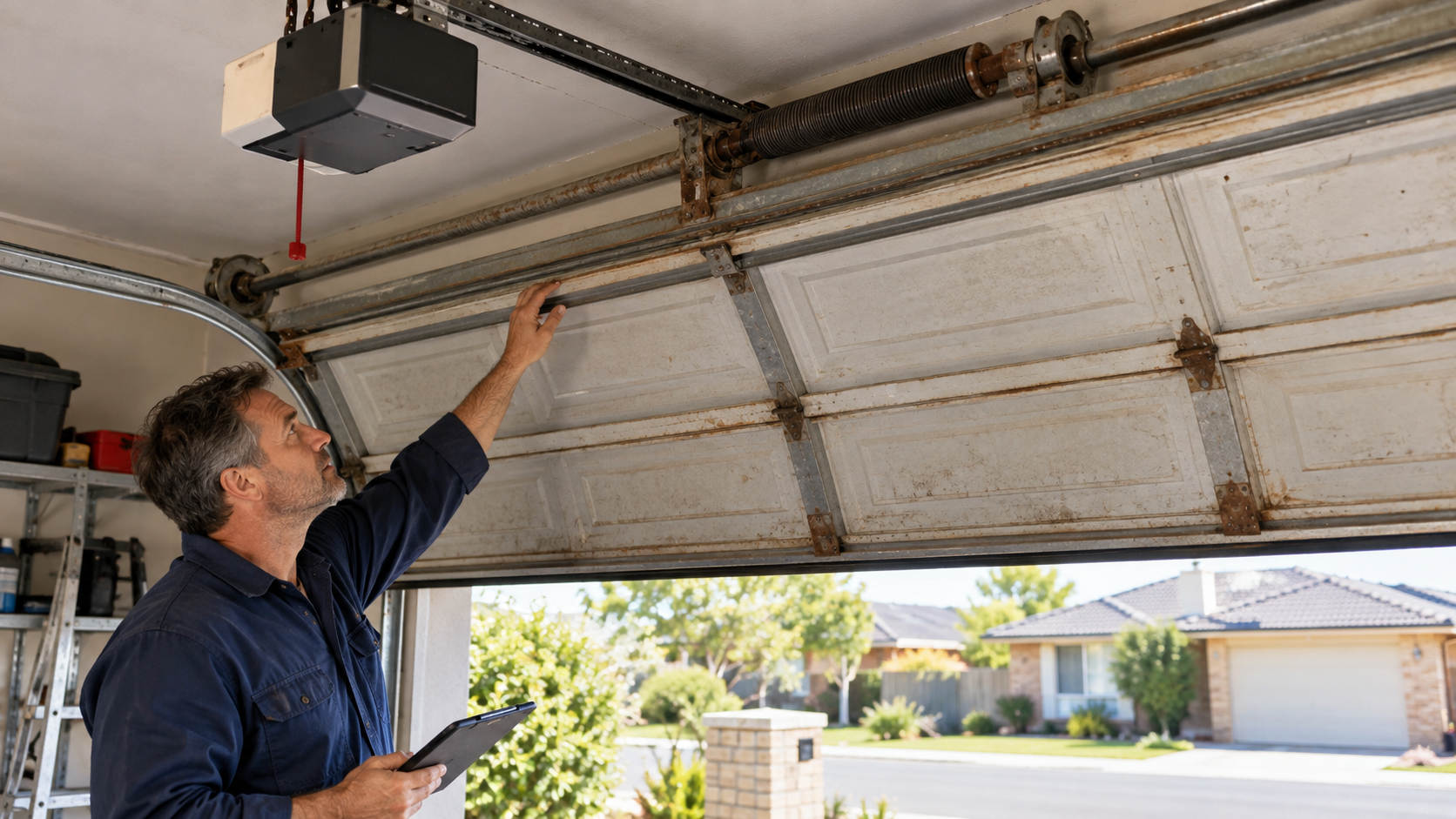
Cracked rollers, frayed cables, bent tracks, rusted springs, or loose hardware are clear signs that something needs attention. Visible damage can worsen quickly when the door is used several times a day.
A small component issue doesn’t always mean you need a new door. In many cases, repairing the affected part can restore safe, reliable operation.
When Is Garage Door Repair the Better Choice?
Not every problem calls for a new door. In many cases, a targeted repair is the smart, cost-effective choice.
Worn Springs Or Rollers
Springs and rollers are wear items designed to be replaced. Swapping them out on an otherwise healthy door can restore smooth operation for a fraction of the cost of a full replacement. If the door itself is still in good condition, there may be no reason to replace the entire system. Replacing worn components can improve performance, reduce strain on the opener, and extend the door’s useful life.
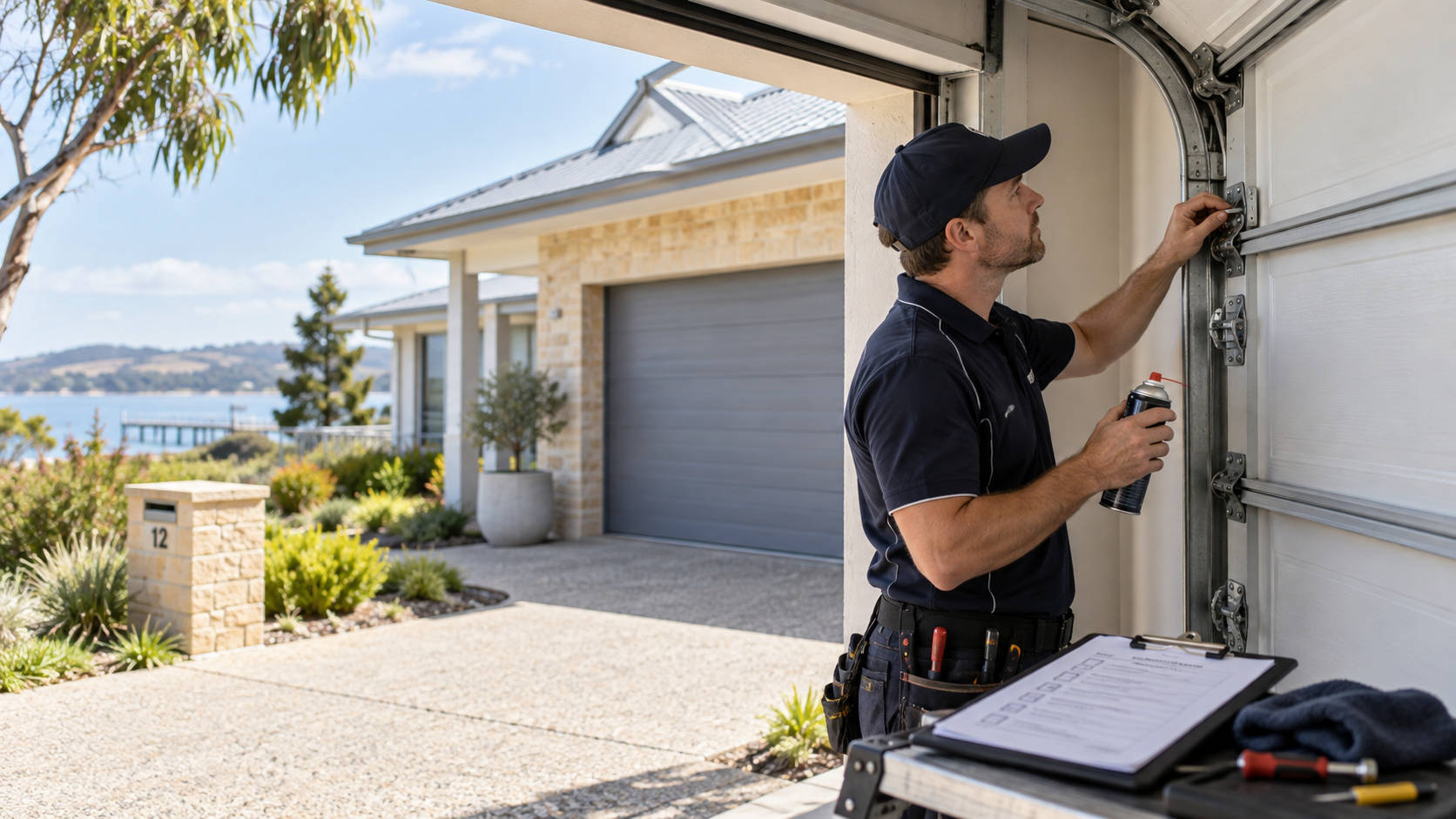
This is one of the most common garage door repairs for residential properties. Filip’s Garage Doors handles this type of work as part of its standard residential garage door repair service across the Fleurieu Peninsula and Adelaide.
Minor Opener Issues
A faulty remote, a worn drive gear, or a misaligned sensor is usually a straightforward fix, and it’s far less costly than replacing the whole motor and having it reinstalled.
Age Still Within Lifespan
If the door and opener are still inside their expected working life and the fault is isolated, repair is the sensible path. A five-year-old system with one bad part rarely justifies a full replacement.
If you’re unsure which category your situation falls into, this guide on choosing the right service for a residential garage door repair walks through the decision in more detail.
When Should You Replace Your Garage Door?
Sometimes repairs stop making financial sense. Recognising that turning point saves you from pouring money into a system near the end of its life.
Repeated Repairs Adding Up
When small fixes start stacking up month after month, it’s worth stepping back and comparing the running total against the cost of a new system rather than continuing to patch the same door indefinitely.
Structural Or Panel Damage
Cracked panels, rust through the steel, or a bent frame usually mean you should replace garage door sections entirely rather than patch them. Structural repairs rarely hold, and a compromised door is a security and safety risk for homes and commercial sites alike.
End Of Opener Lifespan
An opener past 15 years, especially one without modern safety sensors, is worth replacing outright. Newer units add photo-eye sensors, quieter motors, and smart access, all of which improve day-to-day safety and convenience.
How Much Does Garage Door Repair or Replacement Cost?
Costs can vary depending on the door’s size, material, condition, and features. Installation requirements and the type of opener can also affect the final price. Treat any online figures as general guidance rather than a fixed quote.
Before budgeting for a replacement, it’s worth having the existing system assessed. This can help determine whether you need a full replacement or whether repairing a worn or damaged component is enough.
New Door Price Factors
Panel material, door size, insulation, and finish all drive the final price. A quality new door also lifts kerb appeal and resale value, which is worth weighing against the sticker price.
Opener Replacement Ranges
A new garage door motor typically sits in the low to mid hundreds of dollars for the unit itself, depending on the type and features, with installation on top of that. Getting an exact figure for your specific door and opener combination is always worth a quick phone call rather than guessing from a general range.
Repair Versus Replacement Math
The rule of thumb is simple: add up the likely repairs, then compare that figure against a new system over its full expected lifespan. If a door is still relatively young and the fault is isolated, repair almost always wins on cost. If it’s old, corroded, or needing frequent attention, the maths tends to swing toward replacement.
| Scenario | Choice | Expected lifespan gain |
| Worn springs or rollers | Repair | 7 to 12 years |
| Faulty opener part | Repair | Several years |
| Opener past 15 years | Replace | 10 to 15 years |
| Cracked or rusted panels | Replace | 20 to 30 years |
| Repeated stacking repairs | Replace | 20 plus years |
Garage Door Repair and Replacement Frequently Asked Questions
Knowing When to Repair or Replace Your Garage Door
The short version on garage door lifespan is this: openers typically last 10 to 15 years, springs around seven to 12 years, and quality panels can last 20 to 30 years with proper care. Wear rarely arrives without warning, so noisy operation, sagging sections, and a sluggish opener are your cue to act early.
The repair versus replace decision comes down to age, safety, and the running total of costs. Isolated faults on a garage door still inside its lifespan usually favour repair. Stacking repairs, structural damage, or an ageing opener point toward replacement.
A professional inspection removes the speculation, whether that’s for a home or a commercial garage door, and a good technician checks spring tension, track alignment, sensor function, and motor health before giving you a written quote.
Filip’s Garage Doors is ready to talk through what your door needs, with no call-out fee and no obligation. Contact us to book an inspection when you’re ready.