Quick Answer
Is your garage door sensor not working? Clean both lenses, clear anything in the beam’s path, and make sure the two sensors face each other. Check the visible wiring for damage, then reset the opener. If the door still reverses, or a sensor is cracked, corroded or water damaged, call a technician.
You press the remote. The door starts to close, then stops and goes straight back up. Sound familiar?
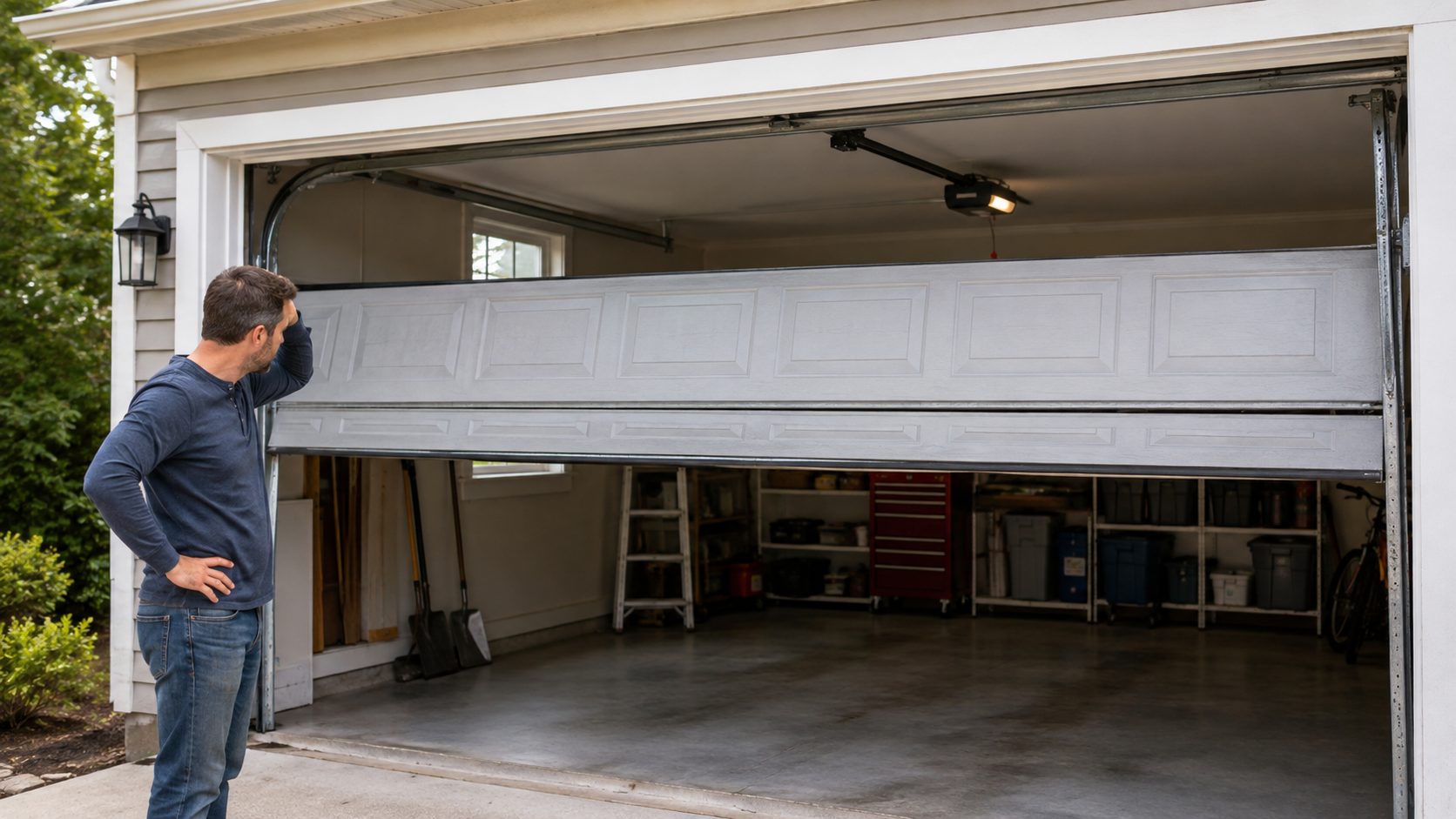
Or maybe it won’t move at all, and the light on the opener keeps blinking.
Very often the cause is a garage door sensor not working properly. The good news? It’s often an easy fix.
Living near the coast makes it more likely. Salt air and sea mist are tough on garage door parts around Goolwa, Middleton and Port Elliot, and sensor lenses are no exception.
If your garage door won’t close, here are the safe checks you can do yourself. We’ll also cover when it’s time to hand the job over to us. For the wider picture, garage door issues can have several common causes.
How Do Garage Door Safety Sensors Work?
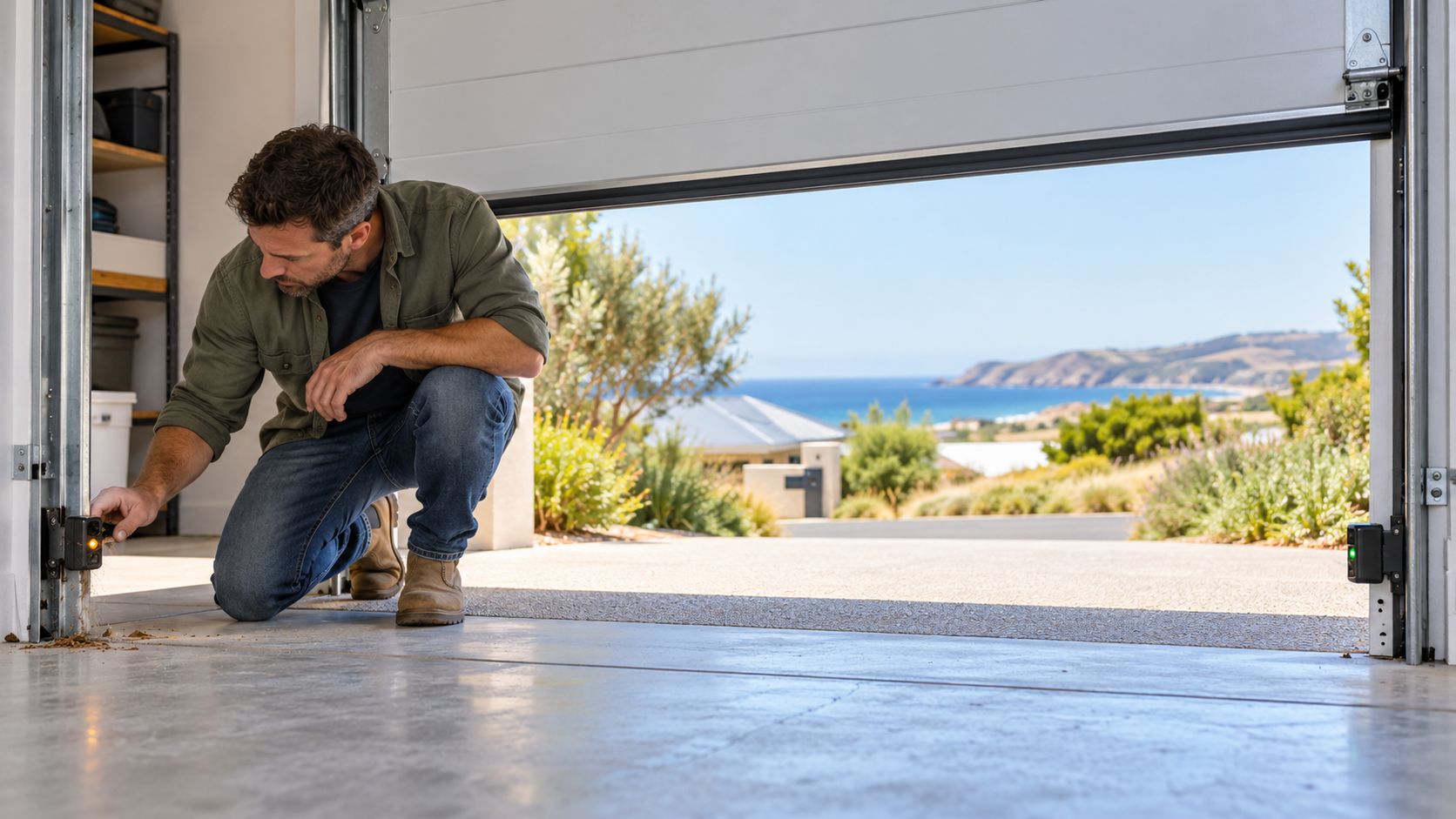
Your garage door safety sensors are two small units mounted low on each side of the door opening, near the base of each track. One sends an invisible infrared beam. The other receives it.
If anything breaks that beam while the door is closing, the opener stops the door and sends it back up. That stops it coming down on a person, a pet, your car or the kids’ bikes.
This auto reverse feature is an important safety layer on automatic garage doors. Product safety guidance notes that unsafe products can cause serious injuries, so never remove or bypass your sensors, not even for a day.
Small children are at risk around driveways, even when vehicles move slowly. Working sensors and active supervision whenever a vehicle moves can reduce that risk.
Is the Sensor Really the Problem?
Run through this quick list:
- The door goes back up before it reaches the floor
- The door opens fine but won’t close with the remote
- The door only closes while you hold down the wall button
- The light on the opener unit blinks or flashes
- The sensor LED is off, flickering or a different colour from usual
A blinking light on the opener often points to a sensor fault. The pattern varies between brands, so your manual shows what each flash means.
Ticked one or more? Try the checks below before you book a callout.
7 Simple Checks You Can Do Yourself
Most of these take just a few minutes. All you need is a soft cloth and a bit of patience.
1. Look at the Sensor Lights
Most sensors have a small LED. A steady light usually means the beam is connecting. A blinking light, or no light at all, points to an alignment, power or wiring fault.
Colours vary by brand. On many models, the sending unit shows red or amber, and the receiving unit shows green. Check your opener’s manual to be sure.
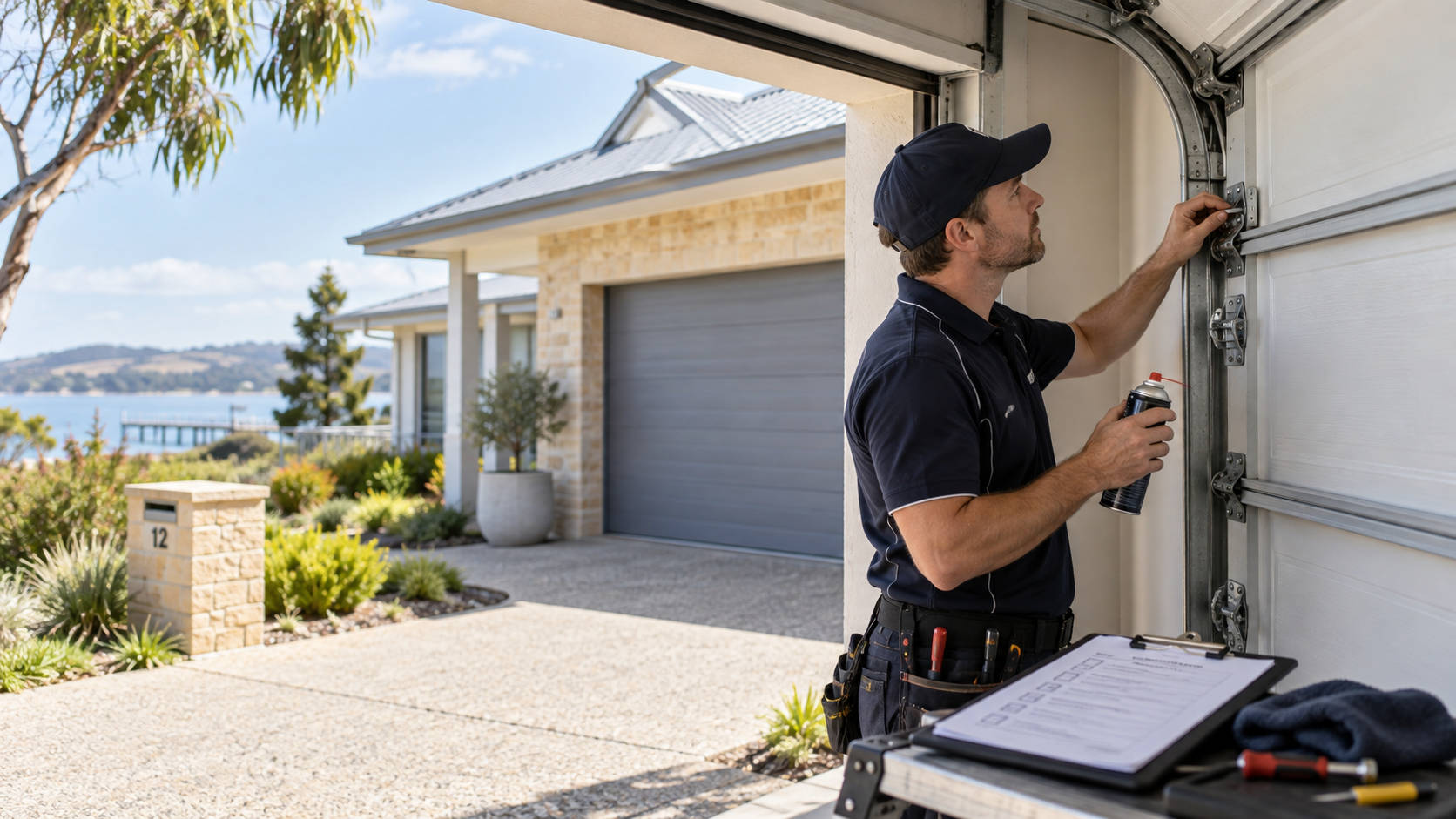
2. Clean the Lenses
Gently wipe each lens with a soft, dry microfibre cloth. Dust, cobwebs, salt spray and spider nests are the usual suspects.
Live in Goolwa, Middleton or Port Elliot? Salt residue builds up faster near the water, so clean your lenses more often.
3. Clear the Beam Path
Look for bins, boxes, garden tools, leaves or gym gear sitting in line with the beam. Even a hanging rag can block it.
Do you use your garage as a gym or workshop? Keep a clear strip along both sides of the door opening.
4. Check the Alignment
Cars, bikes, kids and the odd whipper snipper all knock sensors out of place. Both units should face each other at the same height. Fixing your garage door sensor alignment is often all it takes.
Loosen the bracket screw and gently adjust the sensor until both LEDs stay steady. Then tighten the screw again. A spirit level or string line helps you line them up.
5. Inspect the Wiring
Follow the thin wires from each sensor. Look for cuts, chewed sections, loose terminals or corrosion. Rodents love a quiet garage.
Note any damage, but leave repairs inside walls or the opener to a professional. Your opener connects to mains power, so leave electrical work inside the opener or wiring system to a licensed professional.
6. Rule Out Sun Glare
Strong morning or late afternoon sun shining straight into the receiver can confuse the beam. It can be more common in west facing garages.
Does your door only play up at certain times of day? That’s a big clue. A small sun shield can help, and a technician can adjust the setup if glare keeps causing trouble.
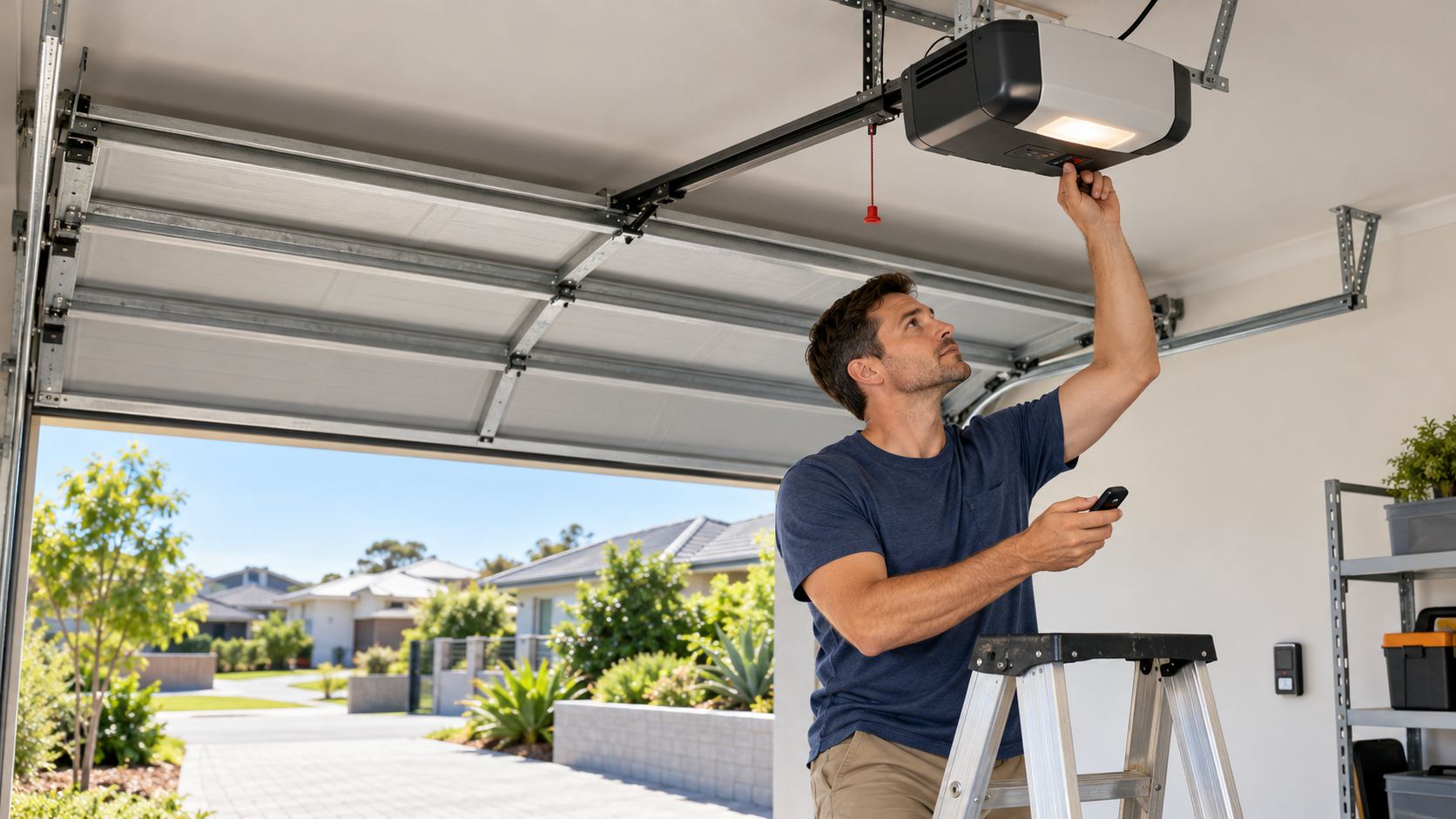
7. Reset the Opener
Switch the opener off at the power point, wait about 30 seconds and turn it back on. It’s a simple but useful step in any garage door opener troubleshooting.
Check the remote batteries while you’re there.
Door still misbehaving after a reset? This guide to why a garage door opens partway then stops covers other causes worth ruling out.
How to Test Your Auto Reverse Safely
Fixed the sensors? Test them before you trust the door again. It takes two minutes.
The beam test: Start the door closing. Pass a broom handle through the beam from a safe distance. The door should stop and go back up.
The contact test: Lay a roll of paper towel flat on the floor in the door’s path. Close the door. It should touch the roll and reverse.
Never use your hand, foot or any part of your body to test. If the door passes either test, you’re sorted. If it doesn’t, stop using the auto close and call a technician.
What You Should Never Do
- Never tape over, remove or bypass the sensors to make the door close.
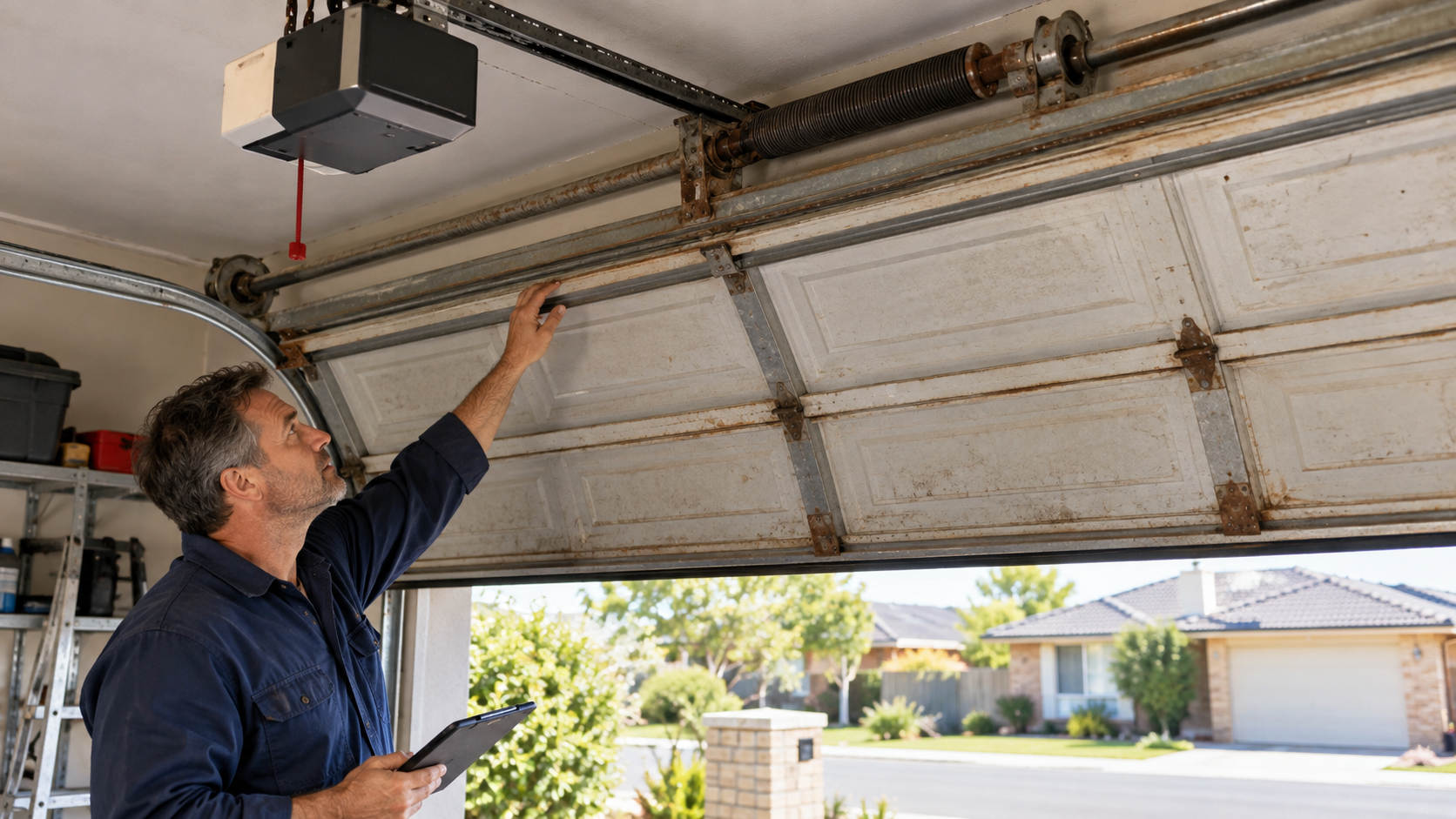
- Don’t touch the springs, cables or drums. They hold a lot of tension and can cause serious injury.
- Don’t keep forcing the door with the wall button if it’s straining or making odd noises.
- Don’t force a stuck door open or closed by hand. A door under spring tension can drop without warning.
Spotted a frayed cable while you were checking? Leave it alone and book a technician.
Why Coastal Homes See More Sensor Trouble
Salt air is harder on metal parts near the sea. That includes sensor brackets, screws and wiring terminals, which can corrode over time.
Sand, sea mist and busy spiders add to the problem. So wipe your lenses monthly if you live close to the water. Check the brackets for rust at the same time.
The team at Filip’s looks after the full life of a door, from new installs to small tune ups, through its residential garage door services across the Fleurieu.
When Is It Time to Call Us?
Some faults need proper garage door sensor repair. Pick up the phone if any of these sound familiar.
1. You’ve done every check, and the door still reverses
The fault may be in the opener’s force settings, the logic board or the tracks.
2. The sensor is cracked, water damaged or corroded
It needs replacing, and the new one has to work with your opener.
3. There’s a wiring fault you can’t see or reach
Hidden faults need proper testing.
4. The door is noisy, jerky, crooked or off balance
That usually points to rollers, springs or cables, not the sensor. Not sure what a sound means? This guide to why your garage door is making noise can help.
5. Your opener is old and parts are hard to find
Before you decide, check how long garage doors and openers last and weigh up repair against replacement.
6. It’s a commercial roller door or shutter
A faulty door can affect security and access at your business, so book commercial roller door repairs and servicing.
7. The problem keeps coming back
Repeat faults usually mean something underneath needs attention.
When It Can’t Wait
A door that won’t close overnight is a security problem. A door jammed shut can also trap a car you need in the morning.
For urgent faults like these, Filip’s offers emergency garage door repair across its service area, with same day service where possible.
What Happens When a Filip’s Technician Arrives?
We start with a full check of your sensors, wiring, opener settings and door balance. Then we realign, repair or replace the sensors using compatible parts that suit your opener.
Before we leave, we test the auto reverse and safety settings. You’ll get honest advice on whether a repair or an upgrade makes more sense. We work on a no fix, no charge basis, with free quotes and no callout fee. Sensor faults are just one of the issues covered by our garage door repair service.
Thinking about an upgrade while we’re there? Garage door automation can add smart features to your existing door.
Filip’s is a family business based in Goolwa. We look after homes and businesses from Port Adelaide down to Goolwa, including Normanville, Yankalilla, Aldinga, Willunga and Seaford.
Need help in the south? Our team covers garage door repairs in Goolwa every week.
Further along the coast? We also look after garage door repairs in Victor Harbor.
What Affects the Cost of a Sensor Repair?
Sensor replacement is usually one of the smaller repair jobs. Your final cost still depends on a few things:
- Your opener’s brand and model
- Whether the wiring needs work too
- Whether other parts, like the opener or tracks, need attention
- The time of your callout, as after hours visits can differ
Want a clear answer before any work starts? Ask for a free quote. Because there’s no callout fee and no charge if we can’t fix it, you’re never paying just to find out where you stand.
Simple Habits That Keep Your Sensors Working
- Test your sensors once a month with the beam test above.
- Wipe the lenses every few months, or monthly if you’re near the beach.
- Keep the area around the tracks clear.
- Book a yearly service to catch worn parts early.
Want a full list to tick off? This annual garage door maintenance checklist covers sensors, springs, rollers and more.
Garage Door Sensor Frequently Asked Questions
Get Your Door Closing Safely Again
Most sensor problems come down to dirt, alignment or something blocking the beam. A few minutes of checking often fixes it. If your garage door sensor problem won’t go away, Filip’s Garage Doors can find the cause and fix it, so your door is safe and secure again.
Still stuck with a door that won’t close? Call Filip’s Garage Doors on (08) 8555 4269 or 0402 414 461, or get in touch online to book a service.