A garage door can look fine while wear builds up in the parts you don’t see. Rollers dry out, hardware loosens, and metal components can start showing corrosion. In Goolwa and across the Fleurieu Peninsula, the coastal climate adds another reason to stay on top of maintenance. The region has a moderate climate, with coastal areas influenced by maritime conditions and consistent rainfall.
An annual garage door maintenance check can catch these problems before they turn into costly repairs. A frayed cable, dry roller, or loose bolt may seem minor, but leaving it unchecked can lead to a breakdown. Regular checks also help keep the door running smoothly, quietly, and safely.
This checklist covers the jobs you can handle yourself, from inspecting and lubricating moving parts to testing safety features. It also explains when a problem needs professional attention. No special training is needed for the basic checks, just a little time and care.
#1: Inspect Door Panels and Tracks for Damage
Start with a simple visual once-over. This part of your garage door maintenance checklist helps you spot wear before it affects how the door moves.
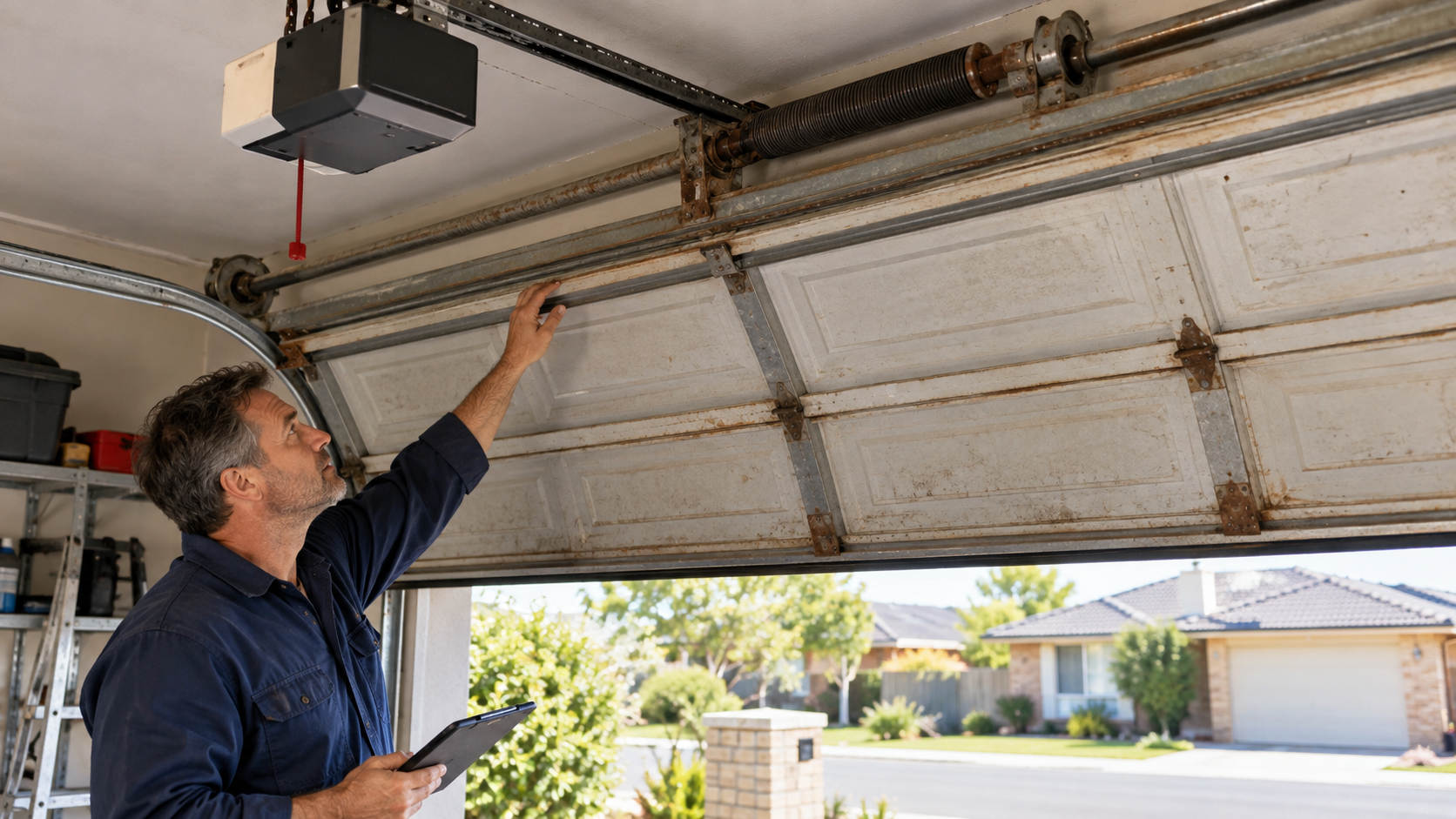
Look closely at the panels for dents, warping, rust, or weather damage. CSIRO’s corrosion research highlights how coastal conditions can accelerate metal corrosion compared with inland environments. That makes regular checks of garage door springs, tracks, hinges, and other exposed metal parts particularly important around Goolwa’s estuary areas. Note any damage that changes how the door opens or closes.
Next, check the tracks on both sides. Clear away leaves, dust, cobwebs, and any debris blocking the path. Inspect the metal for bends, cracks, or spots where the track looks pushed out of line. A misaligned track causes binding, jerky movement, and extra strain on the motor.
Minor Dents vs Structural Damage
Not all damage needs a professional. A small surface dent from a stray cricket ball or a bike usually won’t affect operation. You can leave those alone or address them cosmetically.
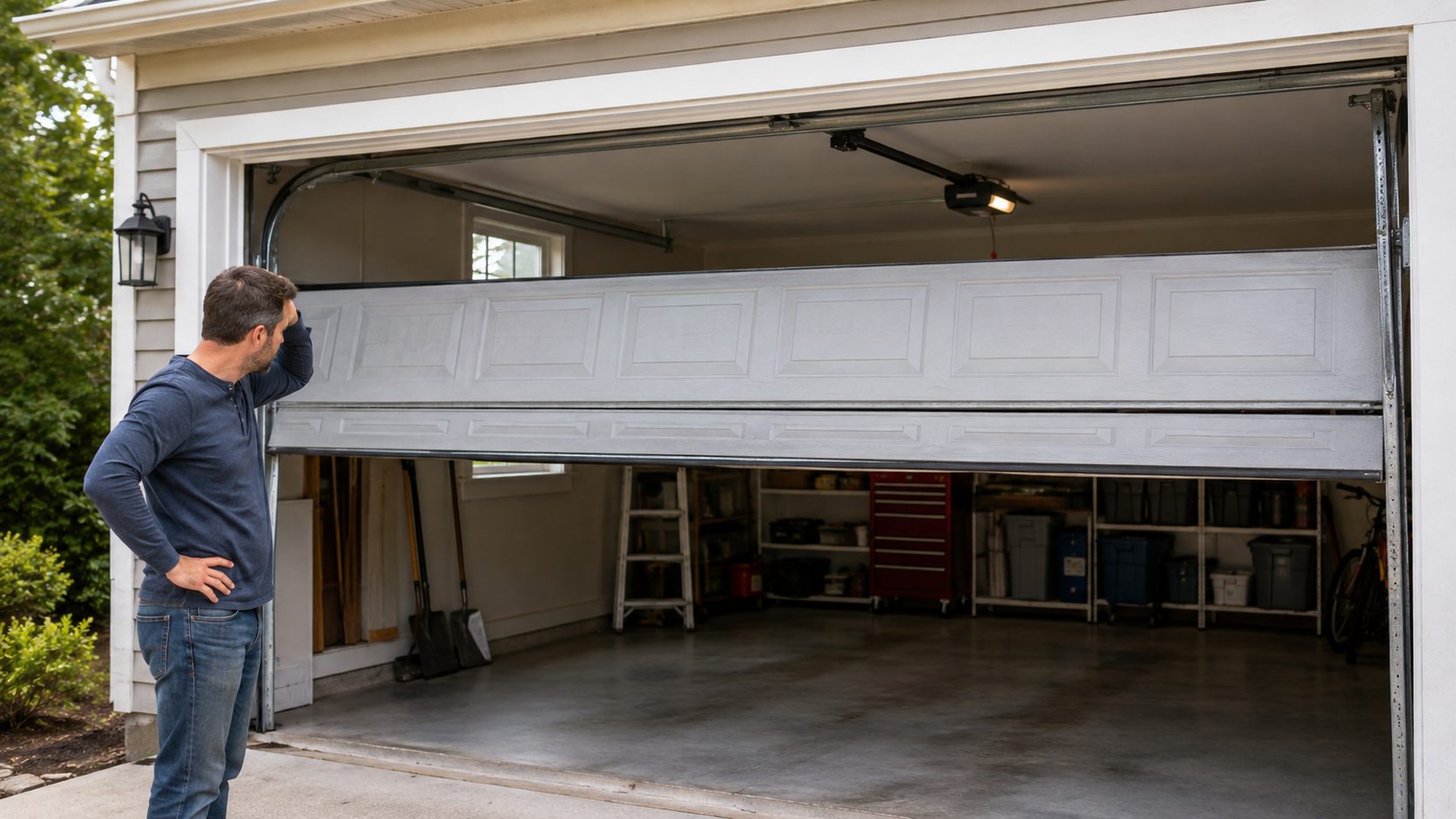
Structural damage is different. If a panel is cracked through, badly bent, or the door looks lopsided when moving, the frame or support may be compromised. Bent tracks and warped panels affect safety and alignment, so book a professional inspection for anything beyond surface marks.
#2: Clean and Lubricate Moving Parts
Lubrication is the single most useful task you can do yourself. It reduces friction, quiets the door, and lowers strain on every moving part. Skipping it is a common reason doors get noisy and wear out early. Reliable garage door maintenance always includes a light lube.
Focus on these parts:
- Hinges: where panels meet and fold
- Rollers: the wheels that run along the track
- Springs: the coiled tension parts above the door
- Opener track: the rail the trolley slides along
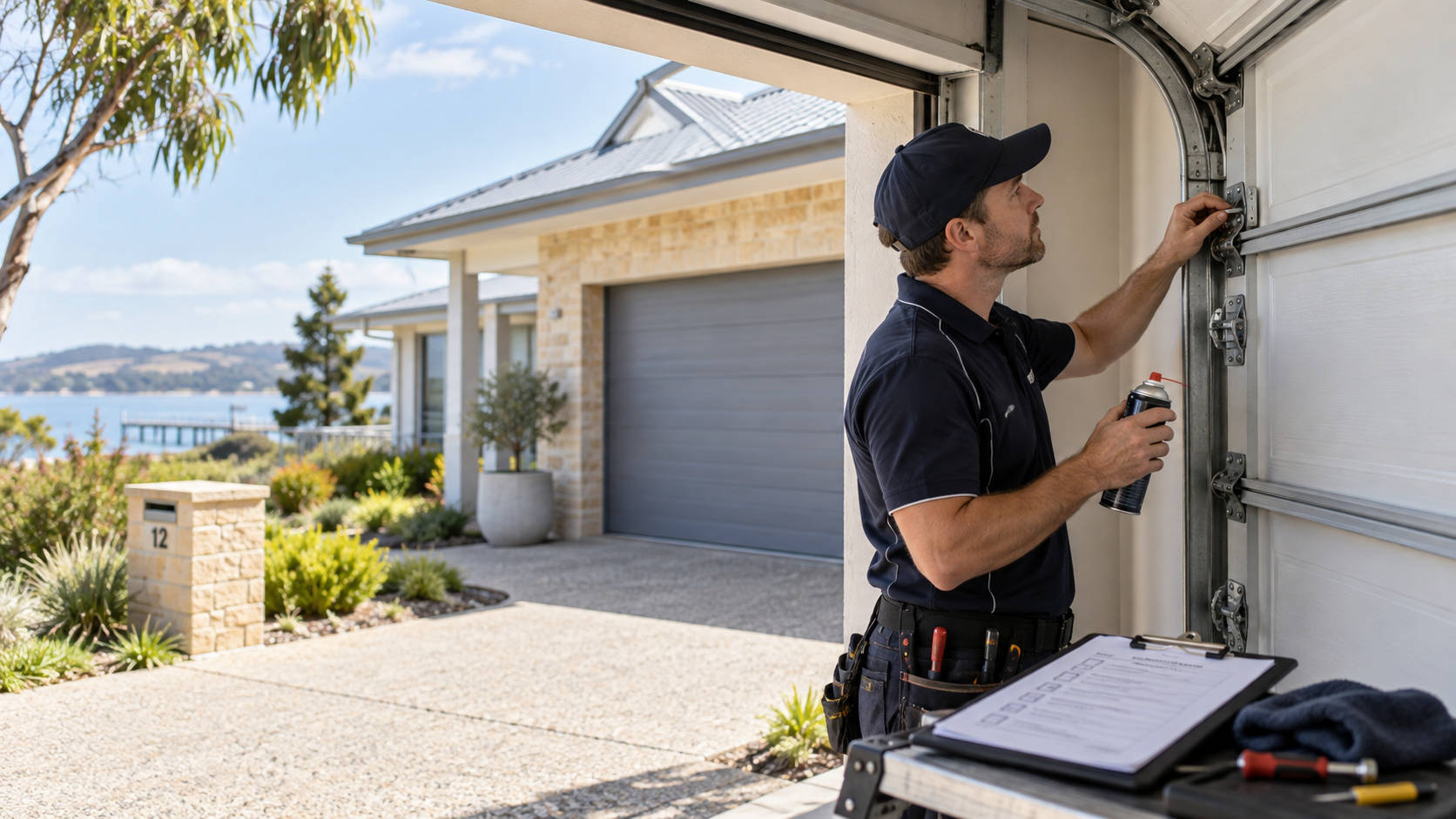
Use a silicone-based spray or a proper garage door lubricant. Avoid WD-40 on springs and rollers, as it strips existing grease and attracts grime. Apply a light coating only. Too much lubricant collects dust and dirt, which does more harm than good.
Wipe down the tracks first with a clean rag, then apply lubricant to the moving parts. Run the door up and down a few times to spread it evenly. Regular lubrication prevents rust and keeps the motor from working harder than it should, which is worth remembering in the salty Fleurieu air.
#3: Test Safety Features and Balance
Safety checks protect your family, staff, and anyone near the door. These take only a few minutes and are worth doing every year.
Auto-Reverse Test
Place a solid object under the closing door. It should stop and reverse when it makes contact. If it keeps pushing down, have the safety system checked. The auto-reverse function is an important safety feature. Garage door safety requirements are shaped by Australian standards and industry guidance from groups such as the Australian Garage Door Association.
Sensor Check
Check the photo-eye sensors near the bottom of the door. Make sure they are aligned and their LED indicators are steady. Interrupt the sensor beam while the door closes. It should stop and reverse.
Balance Test
Disconnect the opener and lift the door halfway by hand. It should stay roughly in place when released. If it drops or rises on its own, the springs may need professional attention.
#4: Tighten Hardware and Listen for Unusual Sounds
A door cycles up and down thousands of times a year, and that constant movement loosens hardware over time. A quick tightening keeps everything solid.
Use a socket wrench to check the bolts and brackets holding hinges, track hangers, and the opener motor mount. Tighten any that feel loose, but don’t overtighten and strip the threads. Firm and snug is the goal.
Your ears are a great diagnostic tool. Run the door through a full cycle and listen carefully. Grinding, squeaking, or rattling usually points to worn bearings, dry parts, or misaligned tracks. Light squeaks clear up after lubrication in many cases.
Sounds coming from the springs or cables are a different story. Sharp bangs, popping, or a loud snap warrant an immediate professional inspection. Springs hold enormous tension and should never be adjusted without training.
#5: When to Call a Professional
Knowing your limits keeps you safe. Some tasks belong to certified technicians, full stop. Good garage door maintenance for Fleurieu homeowners includes knowing where that line sits.
Springs, cables, and opener motors carry high tension or electrical risk. A snapped spring or cable can cause serious injury, so leave these to trained hands. Recognising when to service a garage door professionally is part of good upkeep.
Regular professional inspections spot wear patterns and alignment issues early, which extends the door’s working life. A yearly service protects your investment and keeps the door running the way it should.
If you’d rather have someone else run the full checklist, emergency and routine repairs across Goolwa are handled the same way, whether it’s a scheduled service or something that’s come up unexpectedly.
Below is a quick guide to what you can do yourself and what needs a professional.
| Task | DIY or Professional | Key Consideration |
| Cleaning tracks | DIY | Simple, low risk |
| Lubricating parts | DIY | Use the right product |
| Tightening hardware | DIY | Don’t overtighten |
| Balance adjustment | Professional | Involves spring tension |
| Spring or cable repair | Professional | High injury risk |
| Opener motor repair | Professional | Electrical work |
Emergency issues, like a stuck door, a broken spring, or opener failure, call for professional service. Response times vary by provider, so confirm availability when you book.
Frequently Asked Questions
Keep Your Garage Door in Top Condition
Annual maintenance is one of the smartest habits any homeowner or business owner can keep. It prevents costly emergencies, keeps the garage door running quietly, and adds years to your investment. A little time each year saves a lot of money down the track.
Work through this checklist once a year, and stay honest about your limits. Cleaning, lubricating, and simple tests are yours to do. Anything involving springs, cables, or the motor deserves trained hands.
Not sure where to start, or found something during your inspection that looks off? Filip’s Garage Doors is ready to book a professional maintenance check across Goolwa and the Fleurieu Peninsula.
Contact our team to book a maintenance check.