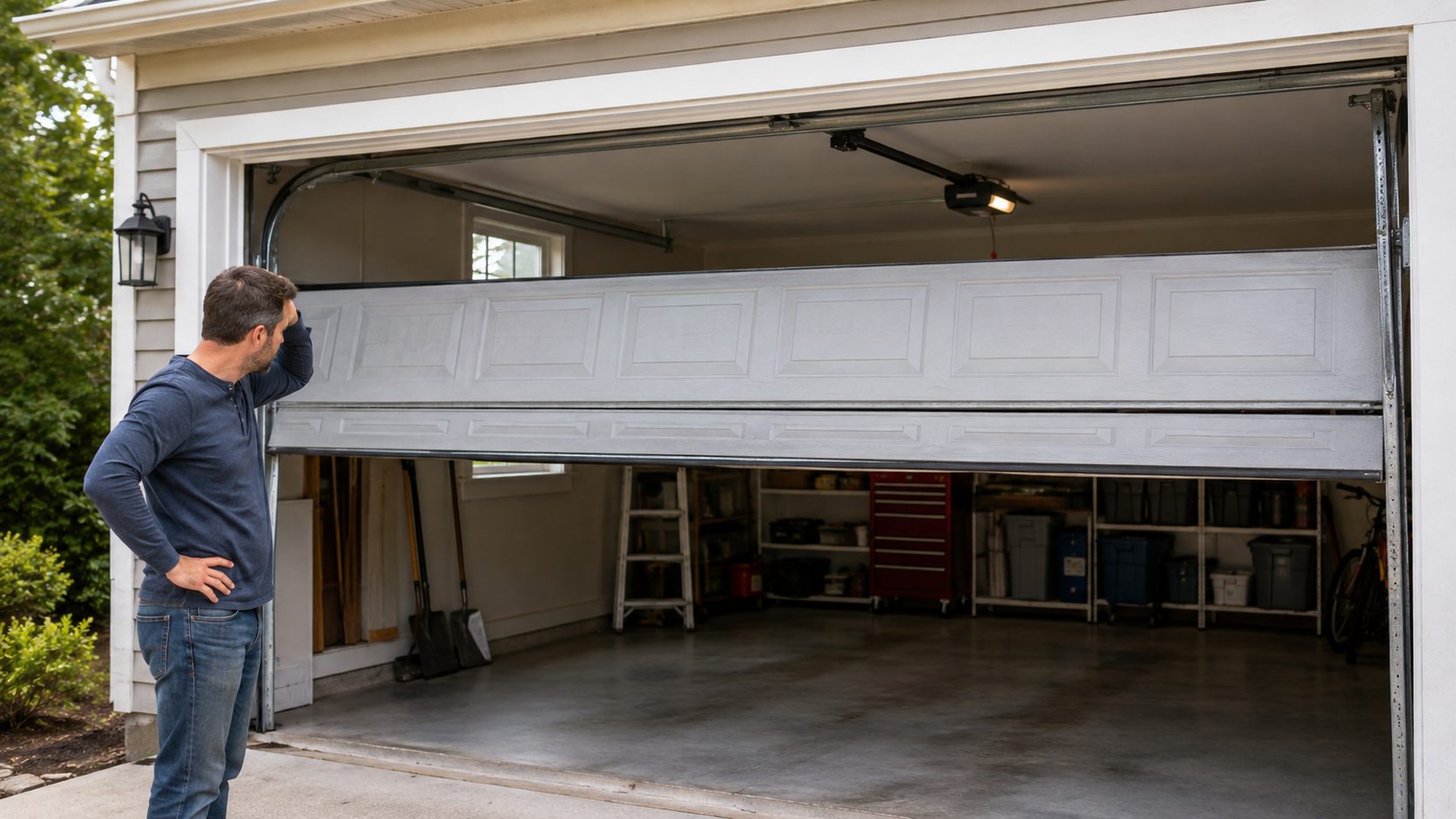

G’day folks! We all know that the good old garage door is one of the most used and often under-appreciated parts of our homes. It protects our cars, our tools, our storage, and sometimes even the kids’ bikes. But like anything that gets a workout, it’s bound to show signs of wear and tear. Knowing when it needs a bit of TLC can save you heaps down the road in costs and inconvenience. Let’s chat about how to spot when your residential garage door needs some repair work.
Understanding Your Garage Door
Before diving into repair-mode, it’s worth getting to grips with the basic parts and mechanics of your garage door. Knowing the ins and outs helps you pinpoint problems a lot easier.
- Metal Tracks: These rails on the garage walls are where your door rollers cruise along.
- Rollers: Little wheels that make sure the door slides open and closed smoothly.
- Hinges: The connectors between the sections of a roll-up garage door.
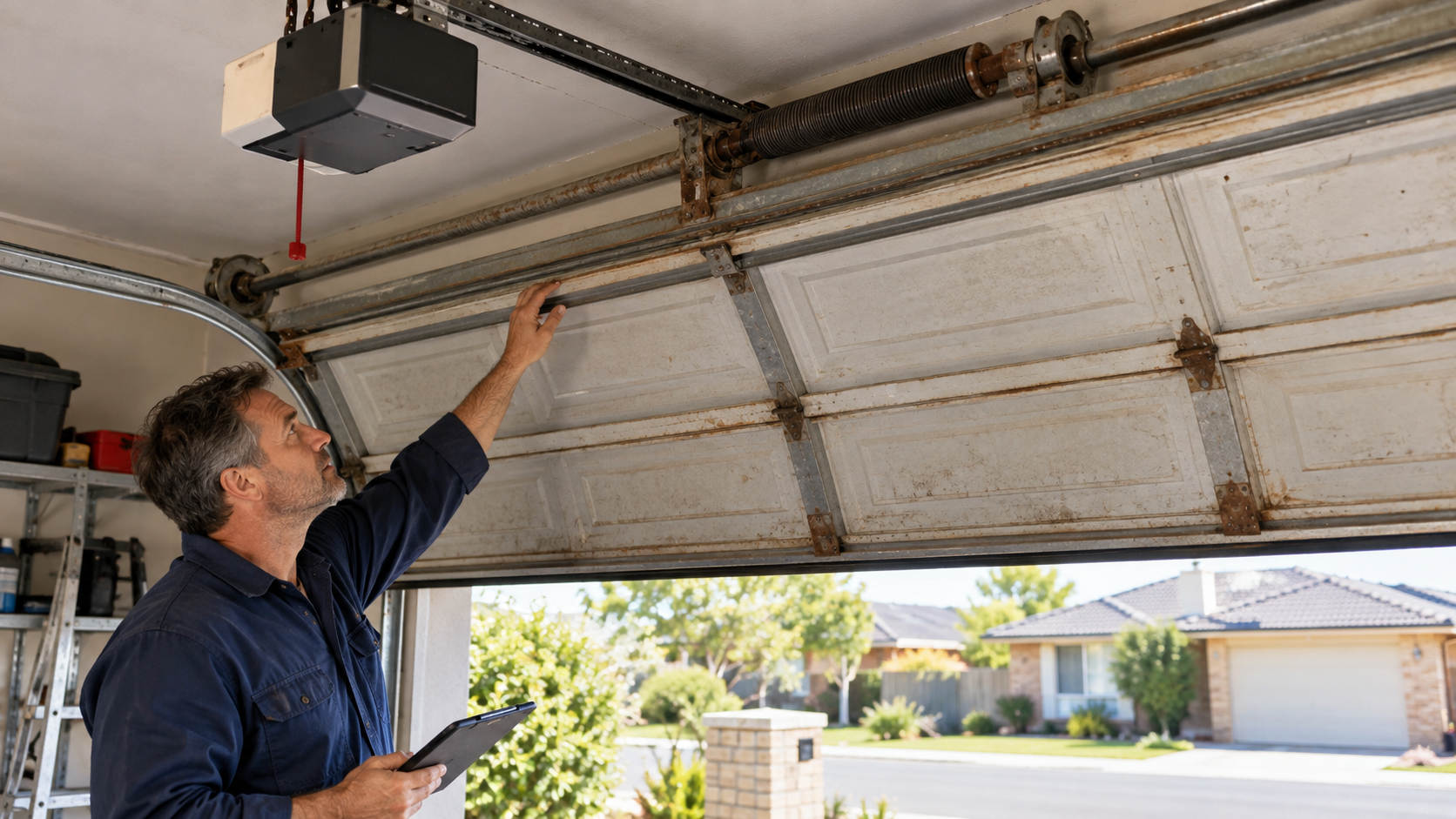
- Springs: The muscle behind the door’s movement. Torsion springs are up top, while extension springs are on the sides.
- Cables: These keep things in balance and help lift the door.
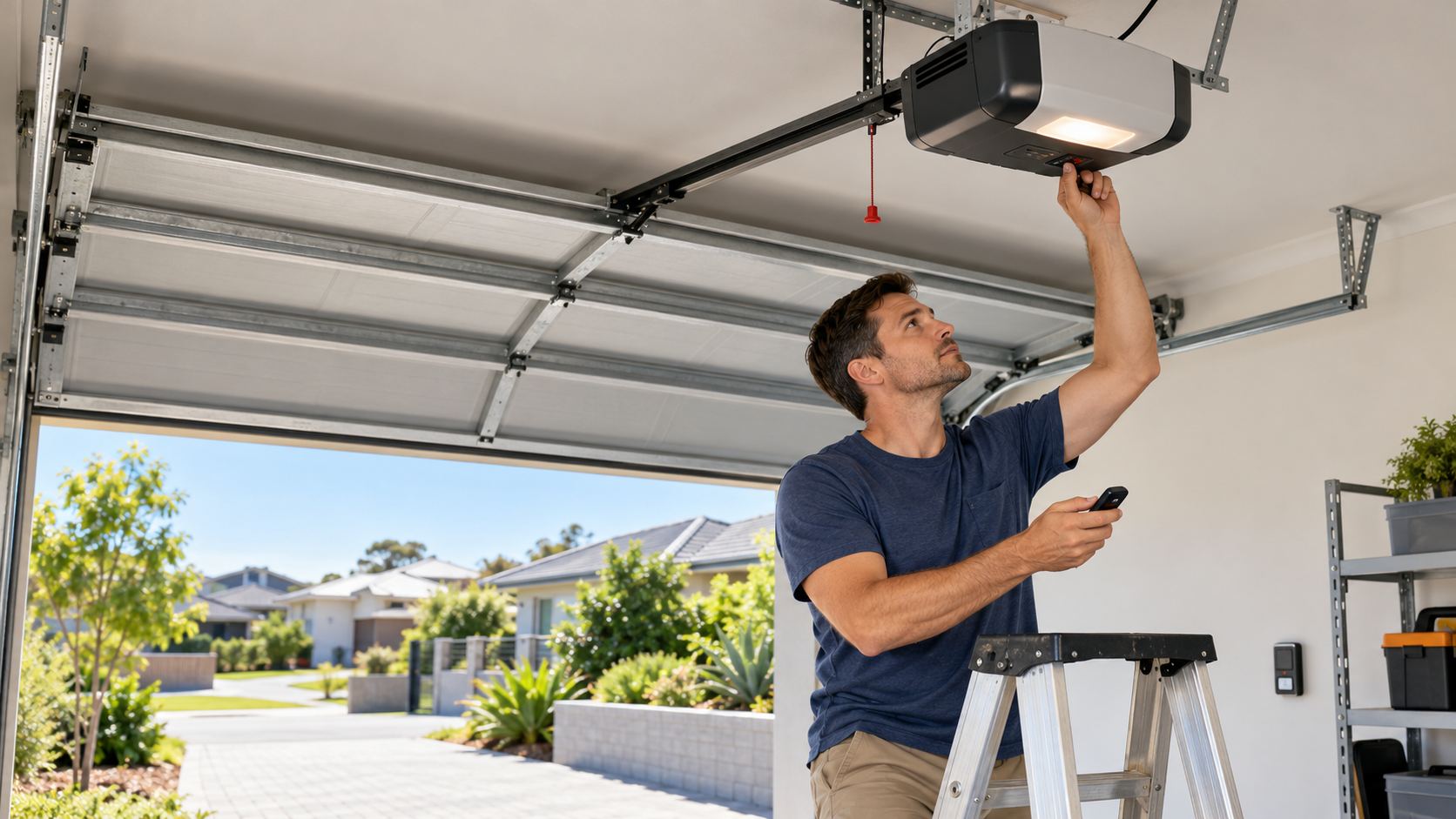
- Opener: The motorised champ that does the heavy lifting to open and close your door.
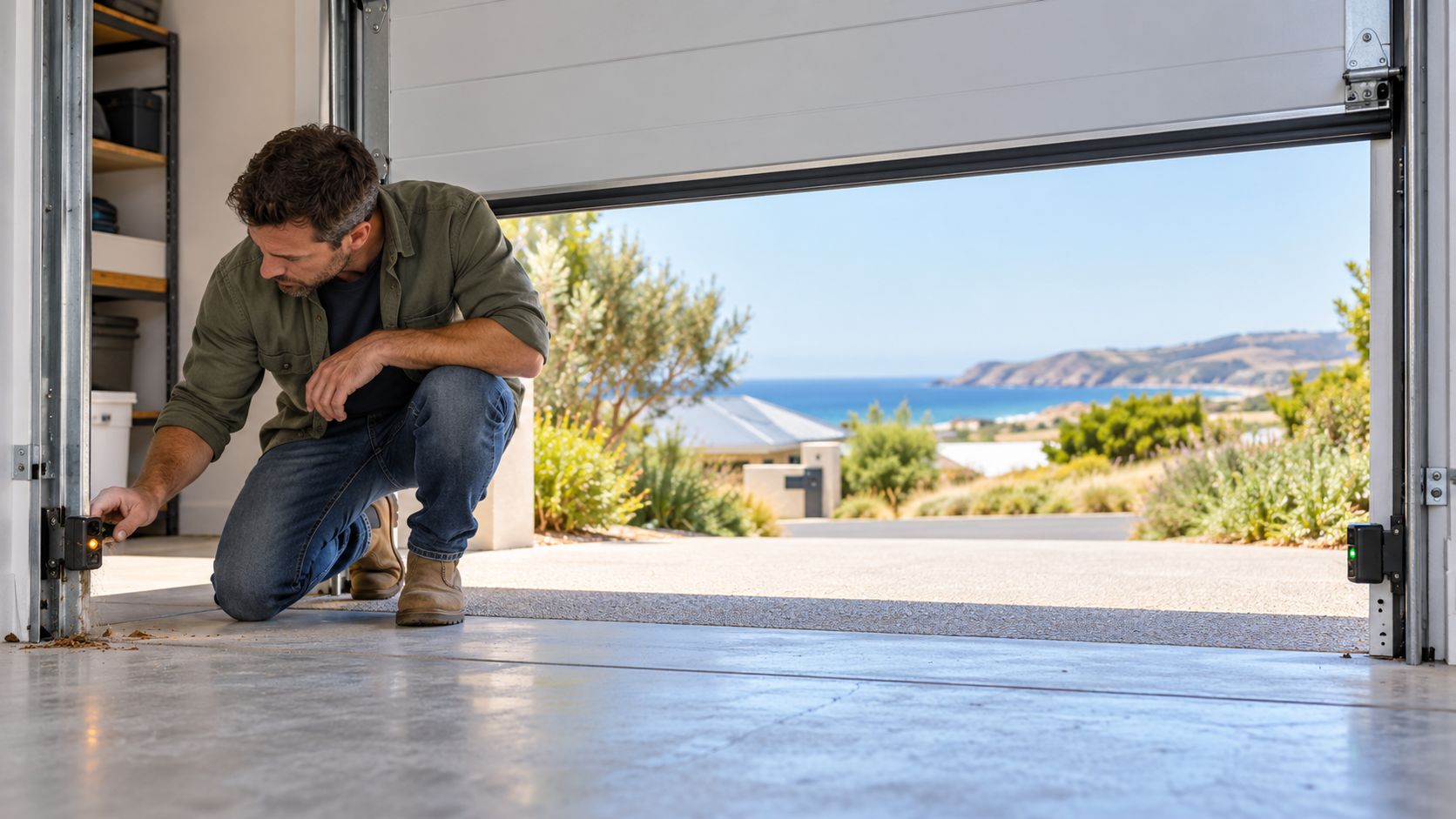
- Photo Eyes: Safety sensors that ensure the door doesn’t take out anything in its path when closing.
Common Issues and Repairs
Residential garage door repair can often be a straightforward affair if we catch the clues early enough. Here’s where things usually go a bit pear-shaped:
Tracks and Rollers
1. Check the Tracks
Your tracks need to be straight and true. Misaligned tracks cause the door to jam or stick. You can fix minor misalignments by loosening the screws, adjusting, and then retightening them. If unsure, a level tool helps keep things straight.
2. Clean the Tracks
Grimy tracks are often the culprit for a slow or sticky door. Grab a household cleaner and a cloth to clear away the muck. Make sure everything’s squeaky clean and dry before rolling away.
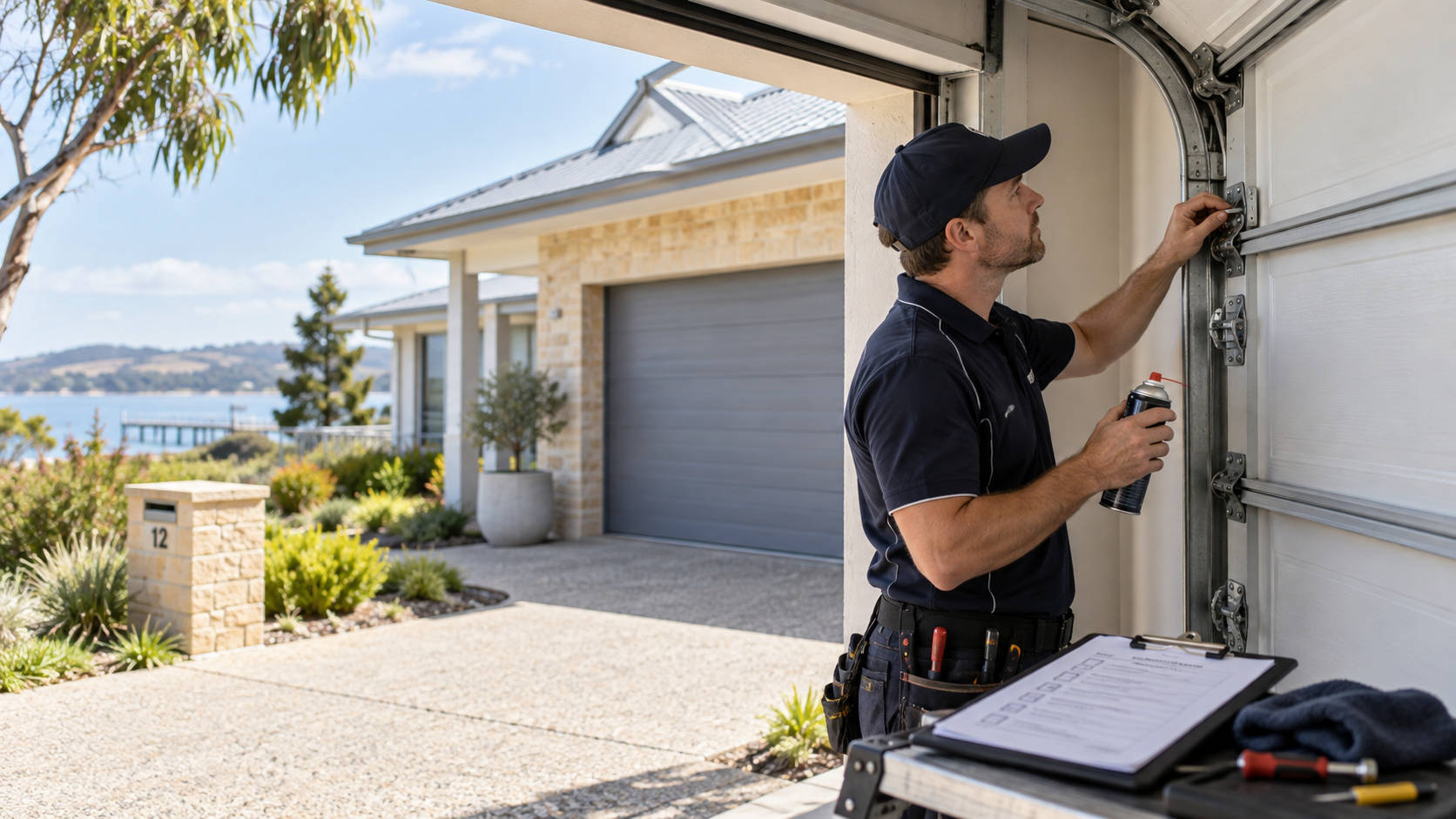
3. Lubricate the Rollers and Tracks
To keep things moving smoothly, a bit of specialised lubricant goes a long way. Just steer clear of WD-40 or lithium grease as these aren’t cut out for the job.
Hinges and Sections
1. Tighten Loose Hinges
Loose hinges can make your door sag or creak. Tighten any pesky screws and consider using carpenter’s glue with longer screws if holes are a bit dodgy.
2. Repair Sagging Sections
If one side’s looking a bit droopy, worn-out hinges might be the problem. Give those hinges a once over and replace if needed. Wood fillers can patch up any cracks near the hinges real nicely too.
Springs and Cables
1. Inspect Springs and Cables
These parts require a careful eye. With the door closed, check for any signs of damage or wear. These components are critical and best left to professionals if they need attention.
2. Replace Damaged Springs or Cables
If there’s wear or damage, don’t DIY it. Call in the experts to handle it safely and effectively.
Opener and Remote
1. Check the Opener
Ensure the opener is doing its job. If the remote’s not working, it’s probably a battery issue.
2. Force Setting Test
If the door doesn’t reverse after obstruction, the closing force needs an adjustment – better done by professionals for safety.
3. Photo Eye Test
Check that the safety sensors are in working order by waving something in front of them as the door’s closing. If not, clean the lenses and realign.
Preventive Maintenance
An ounce of prevention is worth a pound of cure, as they say. Regular upkeep keeps things running smoothly and extends the lifespan of your garage door.
Cleaning
1. Clean the Area Around the Door
Keep the garage tidy to prevent stuff like leaves and dirt clogging up the works. Give your door a regular wash too.
Lubrication
1. Lubricate Regularly
A well-oiled machine is a happy machine. Keep the rollers, hinges, and tracks lubed for seamless operation.
Safety Tests
1. Perform a Safety Test
Do the force setting and photo eye tests regularly to ensure everything’s in tip-top shape.
Weather Seal
1. Check the Weather Seal
Inspect the seal to make sure it keeps rain, critters, and draughts at bay. Replace if worn or damaged.
DIY vs. Professional Repair
While you can tackle minor repairs on your own, there are certain tasks best left to the professionals.
When to DIY
- Tighten the loose screws, bolts, and hardware bits—easy as pie for any DIY enthusiast.
- Routine cleaning and lubrication can be done without calling in the pros.
When to Call a Professional
- Spring repairs and heavy lifting are a professional’s job due to safety concerns.
- Complex issues or persistent problems: snag a qualified technician to save time and avoid injury.
Conclusion
Your garage door plays a big role in your home’s security and convenience, so give it some love with regular maintenance and timely repairs. Remember, there’s no substitute for safety, so don’t tackle high-tension components yourself. With these tips under your belt, you’ll keep your door sweet as a nut and running like a dream. Cheers to hassle-free operations and a longer-lasting garage door!