
G’day, folks! If you’re like many Aussies, the garage is not just a storage space, it’s practically another room in the house. But when the garage door goes on the fritz, your valued space suddenly becomes a stress bomb. Understanding the common causes of a damaged garage door and learning how to avoid these pitfalls is key to keeping your garage functional and safe. Let’s dive into what you need to know.
Understanding Your Garage Door’s Weak Points
A garage door is more complicated than it looks—a mini-marvel of engineering if you will. However, this complexity means there’s quite a bit that can go wrong. Here are some clear signs your garage door might be waving the white flag.
Signs of a Damaged Garage Door
- Slow Movement: Notice your door taking its sweet time to open or close? It might be telling you that it’s tired—specifically, the springs, cables, or motor may be worn out.
- Opening or Closing Issues: Struggling to open or close altogether? Always check for simple fixes first, like dead remote batteries or obstructions. If the problem sticks, it could mean deeper issues with the track or motor.
- Uncontrolled Movement: If your garage door has developed a mind of its own, opening and closing when it feels like it, you might have a pesky signal issue or a mechanical fault.
- Unusual Noises: Noisy garage doors are annoying and often a warning sign. Squeaks might just need some lubricant, but loud bangs mean something’s amiss.
- Jerky Movement: If your door is doing the jitterbug, it usually means a spring has gone bust. This can quickly turn dangerous, so don’t ignore it.
- Exposed or Broken Wires: Any wires looking a bit dodgy? Time to sound the alarm, as electrical issues can pose serious safety risks.
- Door Off Its Tracks: This spells serious problems. Don’t try the DIY route here—call in the professionals.
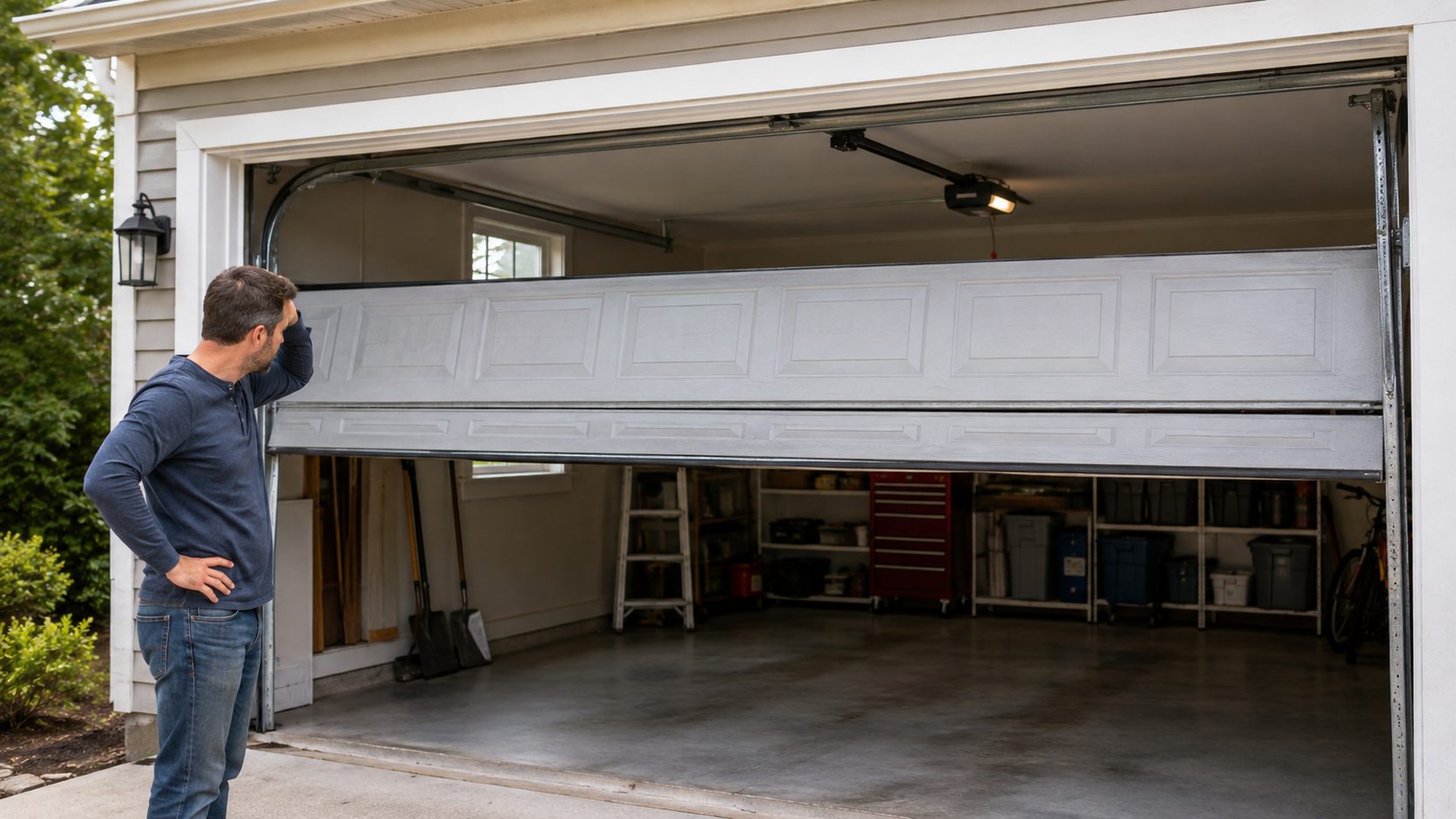
- Dents and Uneven Resting: Dents are unsightly and potentially dangerous, whilst an uneven door can worsen and lead to total failure.
Diagnosing the Problem
Once you know what to look for, the next step is diagnosis. Think of it as giving your garage door a check-up.
Visual Inspection
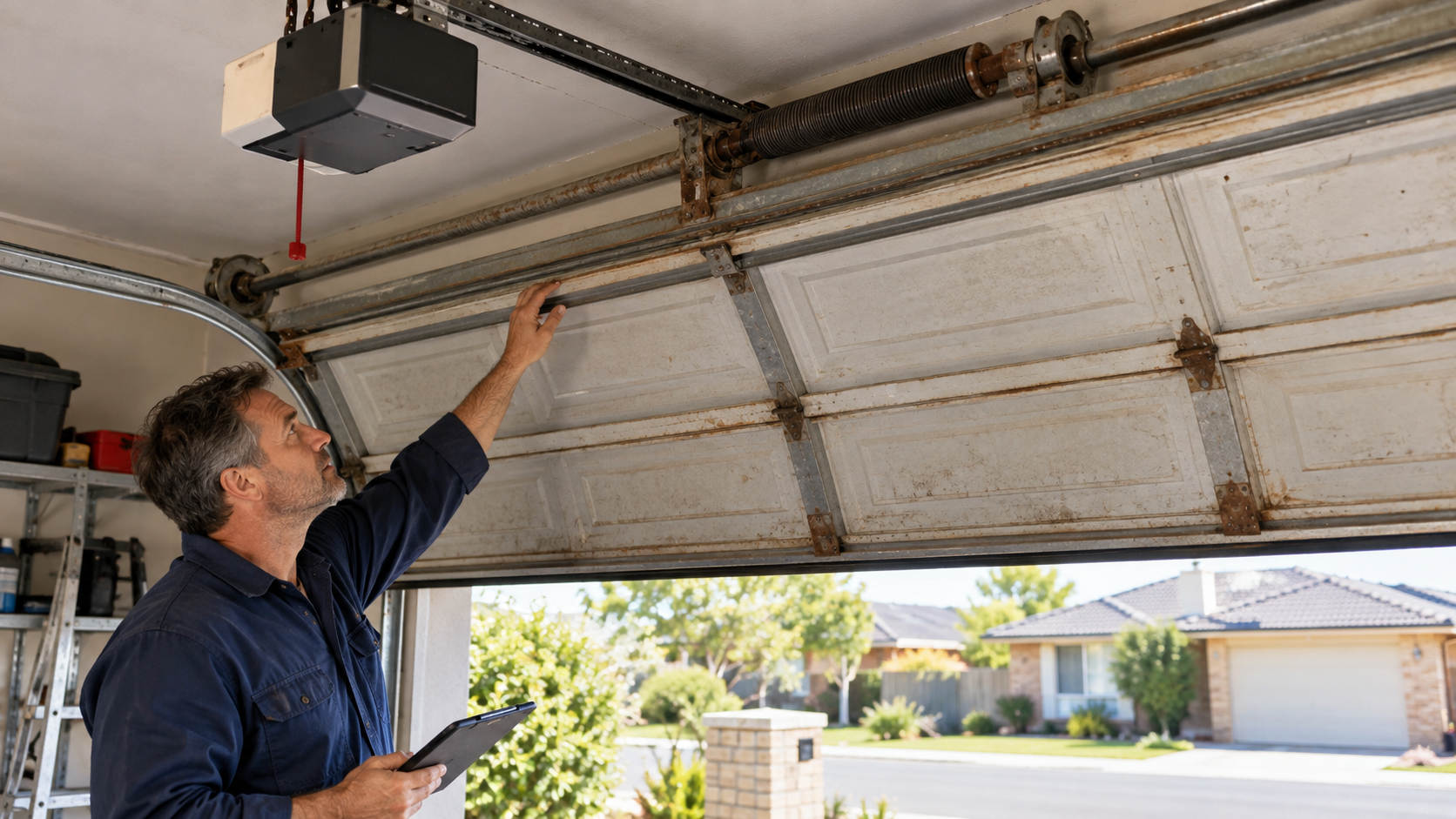
Start inside the garage with the door closed. Inspect the springs, cables, rollers, and tracks. Look for any signs of wear and tear. Are there loose screws or fraying cables? Tighten and fix them if you can, and if something looks off, it might be a sign of bigger trouble.
Photo Eye Test
Garage doors have photo eyes near the base to ensure they don’t close on anything that shouldn’t be crushed. Wave a broomstick in front as it’s closing—if the door doesn’t stop then, it’s time for a clean or reposition of those sensors.
Force Setting Test
Check the closing force by trying to stop the door with your hands while it closes (only when safe to do so). If it doesn’t reverse, the closing force is too strong.
Repair and Maintenance
A bit of elbow grease can prevent a lot of garage door grief. Here’s what you can do to keep yours in tip-top shape.
Lubrication
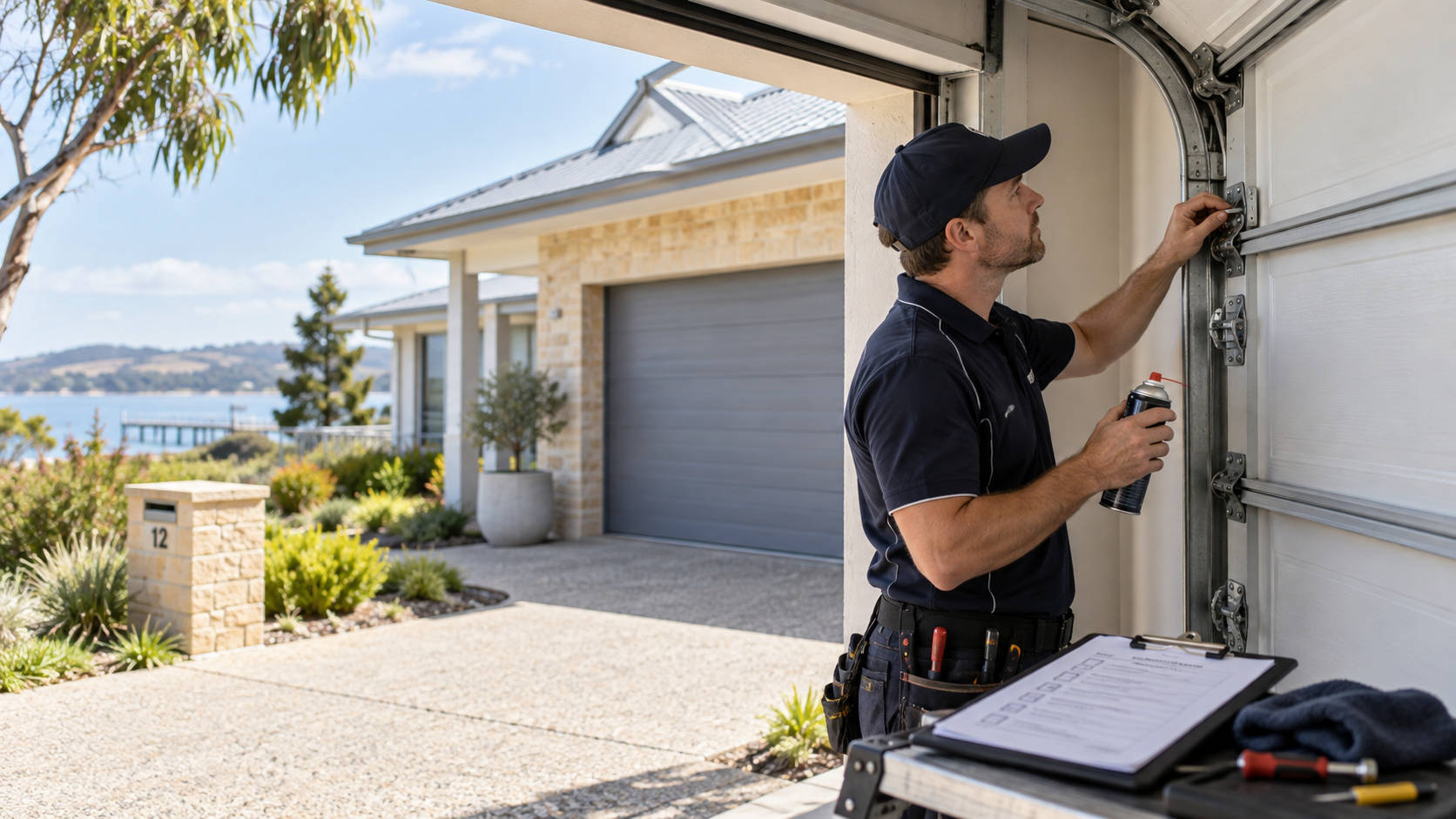
Keeping things moving smoothly is essential. Use a spray lubricant on hinges, rollers, and tracks. This little step can extend the life of your garage door significantly.
Replacing Broken Components
If parts break, replacing them is crucial. But keep in mind that garage door springs and cables are under intense pressure and are best left to professionals.
Resetting After a Power Outage
After a power outage, your door might sulk and stop working. Simply reconnect the opener to the trolley for a complete cycle. If that fails, resist the urge to fiddle further and call for help if needed.
Safety Precautions
Always prioritise safety. Wear gloves and safety glasses when doing any work on the garage door, and keep pets and kids out of harm’s way. If ever in doubt, seeking professional guidance is wise.
Repairing Specific Issues
Now let’s tackle some specific repair scenarios that a true blue garage owner might encounter.
Broken Garage Door Window
Replacing a broken window pane isn’t too bad. Grab some replacement glass, gloves, safety glasses, a screwdriver, and your sealant of choice. Carefully remove broken glass, pop in the new panel, and secure it. Easy as pie, right?
Off-Track Door
This one’s a biggie and not safe for a DIY attempt. If your door goes off its tracks, call in a specialist. They’ll safely realign it without risking a full collapse.
Concluding with Care
Understanding and addressing the signs of a damaged garage door can vastly improve the lifespan and security of your garage. Regular maintenance and quick attention to any issues are crucial. If trouble arises, and you’re not sure where to start, remember it’s never wrong to call in the pros for a bit of expert help. Keep your garage—and everything housed inside—safe and secure. Cheers!